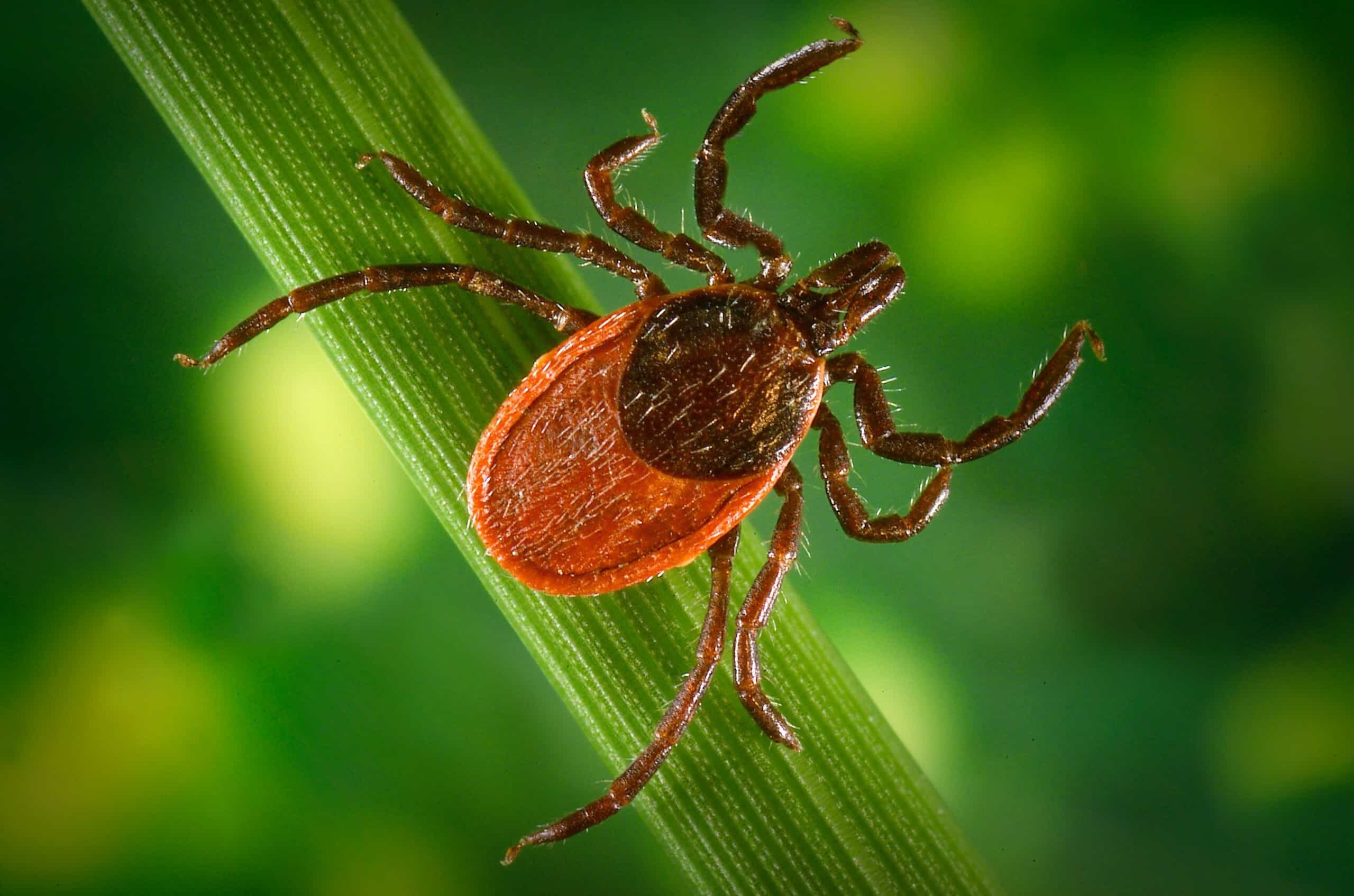

ATHENS COUNTY, Ohio — The number of reported tick-borne illnesses in Ohio has increased in recent years as the tick population has seen explosive growth.
Jenny Leigh, an environmental health specialist with the Athens City-County Health Department, told the Independent that the number of reported tick bites spikes every summer as people get outdoors. This poses a problem for public health as this increased tick activity results in the spread of a number of diseases, according to a press release from The Ohio State University.
“Lyme disease, Rocky Mountain spotted fever, and then also Alpha gal, which is the ‘red meat allergy,’” Leigh said. “Those are probably the three [diseases] that are the most on [our] radar.”
Leigh said that the health department is keeping an eye on the Asian longhorn tick, although they are more concerned about the established populations of deer ticks, dog ticks and lone star ticks.
Nathan Lowien, an emergency room doctor at Ohio Health O’Blenness Hospital in Athens, said that he has witnessed an increase in tick-related hospital visits this summer.
“So far, we are seeing a lot of tick bites, we’re seeing a lot of skin reactions, and anecdotally, we’re seeing more Lyme positive titers come back than I have in any previous year,” Lowien said.
Tick management
Leigh said that the health department keeps track of the Athens County tick population, similar to the department’s mosquito surveillance and control program.

“We do both passive and active tick surveillance. We identify ticks that people bring in, which is helpful for risk assessment,” Leigh said. “And we do active tick surveillance. So we go out to different places in the county and drag for ticks.”
Tick dragging consists of walking through a field with a big cloth. The ticks jump on the cloth thinking it’s an animal, where they can then be counted and identified.
Leigh told the Independent that trying to get an accurate estimate of the tick population is challenging due to their life cycle, differences between species and environmental conditions.
“I think there’s always some ebb and flow [to the tick population],” Leigh said. “Deer ticks, for example – adult deer ticks can be active all winter. Anytime the temperature is above freezing, they’re not bothered by the cold [like] other types of ticks are. For the deer ticks, the nymph and larval stages kind of ramp up during the summer months.”
Leigh added that climate change may play a role in a recent spike in tick activity, similar to what has been occurring with mosquitos. Climate change warms habitats, allowing some species of ticks to spread north into areas that were previously too cold for them to survive, according to the U.S. Environmental Protection Agency.
Leigh said it has yet to be determined whether this year is a particularly bad year for ticks in Athens County.
It is possible for tick populations to vary radically across the county, as small differences in temperature, humidity and tree canopies affect tick survival rates, according to a study published in the academic journal Ticks and Tick-Borne Diseases.
“You could just [be living in] a pocket that’s particularly dense [with ticks],” Leigh said.
Lyme disease
Lyme disease is the most common tick-borne illness: 154 cases of the disease have been reported to the Ohio Department of Health as of May 2025. Lyme disease can result in a number of symptoms including: headaches, fever, muscle pain, joint pain and fatigue.
Ohio has seen a rapid growth in the number of lyme disease cases in the last five years. According to the Ohio Department of Health, there were 414 confirmed cases in 2020, compared to 1,531 in 2024 — a roughly 370% increase.
“Rates of lyme disease in the state are increasing,” Leigh said. “The public health world is paying attention.”
Kat Marriott, the interim director of the Infectious and Tropical Disease Institute at Ohio University, told the Independent that the number of reported Lyme disease cases in Ohio is likely an undercount.
According to Marriott, the current reporting method requires a positive test for Lyme disease, so suspected cases, which are treated with antibiotics and clear up, are not reported to the state.
“I believe that [changing how the Ohio Department of Health records cases] would significantly improve the data, but the process in order to change that is pretty long and complicated, and it involves a lot of policy changes, both at the state and the national level,” Marriott said.
One possible solution suggested by Marriott is for the Infectious and Tropical Disease Institute to create a database including suspected cases. Marriott said that this hypothetical database would more accurately reflect lyme disease rates and provide insight to infectious disease and public health experts.
Lyme disease typically begins with a rash that looks like a bullseye, although it can present as a no particular shape, according to Marriott. Marriott added that a tick needs to be attached for more than 24 hours for Lyme disease to be transmitted
“Briefly attaching for 15 minutes is not enough in order to transfer [the illness,]” Marriott said.

Lyme disease is typically treated with a course of antibiotics, according to the Center for Disease Control. If left untreated, Lyme disease can progress from a temporary illness to a chronic condition characterized by immune system issues, brain fog, nerve issues and weakness, according to the Harvard School of Medicine.
“Most people will get in to see their primary care physician as soon as possible, and for the most part that’s going to be sufficient,” Marriott said. “If [Lyme disease] is caught within a few days to a week, then you’re going to be fine with prescribed antibiotics.”
Rocky Mountain spotted fever
Rocky Mountain spotted fever, also known by its acronym RMSF, is significantly less common in Ohio than Lyme, with only 14 cases reported to the Ohio Department of Health in 2024.
RMSF has similar symptoms to lyme disease, including headaches, muscle pain and fever. However, according to the Ohio Department of Health, untreated or chronic cases of RMSF can result in amputations, hearing loss, paralysis and more.
And whereas Lyme disease is typically spread by only deer ticks, RMSF is carried by several species of ticks.
“We don’t really have a firm grasp on the prevalence of either lyme or Rocky Mountain spotted fever [in Ohio,]” Marriott said. “Rocky Mountain spotted fever uses a different bacterial agent [than lyme disease]. It’s transmitted by multiple types of ticks and the ticks that carry Rocky Mountain spotted fever are less common in Ohio than … in other areas, especially out west.”
Alpha Gal Syndrome
Alpha Gal Syndrome, also written as α-gal, is a disease transferred by ticks that causes those with the condition to experience an allergic reaction when they eat red meat, drink milk or are exposed to products made from mammals. According to the Cleveland Clinic, this reaction is caused by the sugar molecule alpha-gal, which is present in tick saliva and causes the allergy to develop.
“[Alpha gal syndrome] is growing,” Marriott said. “Most likely there’s a connection with the increase of the tick population and the increase in the diagnosis and recognition of alpha gal.”
According to The Ohio State University, alpha-gal symptoms typically develop four to eight hours after eating mammal products and can range from stomach pain and nausea to difficulty breathing and drops in blood pressure. The disease is relatively new, having first been documented sometime between 2000 and 2010. As a result, the condition hasn’t been extensively researched.
“There really is not a lot known about the syndrome or how prevalent it is,” Marriott said. “You know, some people, for instance, like lactose intolerance, they just say ‘oh, well, I just don’t like meat, so I just stopped eating it.’ [They don’t] go through the process of having a formal diagnosis. But yes, it is becoming more prevalent and more recognizable.”
Other tick-related conditions
While these diseases are the primary concerns of public health officials and doctors when it comes to tick bites, there are a number of other conditions that they keep in mind. Ticks have been linked to common skin conditions such as cellulitis and abscesses, according to Lowien.
An extremely rare condition that can result from tick bites is known as tick paralysis.
This condition is caused as a result of an unknown neurotoxin in tick saliva and causes paralysis, which progresses upward from the legs. If left untreated, this can result in death as lung function will eventually stop. Lowien told the Independent that he has never witnessed the condition, but it is something that he keeps in mind when examining patients reporting sensory and movement issues.
“People can have stroke-like symptoms, where over the course of days [a body part] is not moving the way that it should,” Lowien said. “[Once] they find the tick and remove it, [the paralysis] just goes away.”
Ticks don’t need to be removed by a medical professional; This can be safely done at home. However, it needs to be done using the proper method.
“It’s important to use a pair of tweezers or a tick removal tool, if you have one,” Leigh said. “Grab as close to the skin as possible [near the head of the tick] and pull directly out. If you squeeze the tick or distress it, it has the potential to transmit more pathogens as you are removing it.”
Tick research and education
This year, the Infectious and Tropical Disease Institute launched the Infectious Diseases in Appalachian Ohio initiative with the goal of researching and addressing the infectious diseases spreading in the region.
“Identifying, understanding and addressing the infectious diseases that are more prevalent or unique to this area is what that initiative is all about,” Marriott said. “It just so happens that Lyme disease is at the top of the list in terms of a growing problem, but [it’s] also an area where we can incorporate the cooperation of multiple individuals and multiple projects in order to address it.”
According to Marriott, part of the issue is that it’s been decades since large-scale research was conducted on the diseases caused by ticks.
“Large scale surveillance or epidemiology studies haven’t been conducted in a very, very long time anywhere in the United States,” Marriott said.
Marriott said that one way the initiative works to combat the spread of tick-borne illnesses is by ensuring that future doctors and other medical professionals know what signs to look for.
“We held a small educational program at the med school in March for tick bite awareness,” Marriott said. “One of our questions that we are looking into and wanting to address is, what are our medical students learning about Lyme disease and other tick-borne infections? Are they learning enough? Are they learning the right information? Are they equipped to go out there and recognize Lyme disease in a potential patient?”
The institute also sponsors a tick education and tracking workshop targeted at high school science teachers. The workshop is organized by Kip Brady, a science teacher at New Philadelphia High School, and offers science teachers training and classroom curriculum to educate students about ticks.
The workshop also provides valuable data to the Infectious and Tropical Disease Institute by tracking tick populations throughout the region. Marriott hopes the program will help get students interested in careers in public health, epidemiology and environmental management.
“The institute wants to encourage the development of this project … and develop research projects around the data,” Marriott said. “There are a lot of different avenues that not only the science teachers can explore, but also the students can explore. Let’s say that they’re really excited and love going out and collecting the ticks. Okay, well, then let’s talk about environmental careers.”
Marriott hopes that students educated by their teachers in the second phase of the workshop will share their knowledge of ticks with their friends and family.
Marriott added that in the future, the Infectious and Tropical Disease Institute would like to host workshops open to the general public.
“Eventually we would like to bring other health or science adjacent individuals into the mix and potentially put on more workshops that are also about public education,” Marriott said.