Morgan Henderson originally wrote this piece for Bailey’s Trail System blog. It was originally posted on their website April 1, 2025.

Within Athens County, the Baileys Trail System offers over 50 miles of interconnected hiking and biking trails, with plans to build another ~25 miles, depending on cost in 2025.
Trail systems like the Baileys are more than just recreational assets—they contribute to the physical and mental well-being of local community members, drive tourism, boost the local economy, and foster a deep connection between people and the environment.
Maintaining this extensive network requires ongoing effort and collaboration, with volunteers playing a key role in keeping the trails safe and accessible. The Outdoor Recreation Council of Appalachia (ORCA) facilitates these volunteer efforts, ensuring the sustainability and longevity of the Baileys Trail System through partnerships, strategic planning, and community involvement.
What is ORCA?
The Outdoor Recreation Council of Appalachia (ORCA) is a council of governments, made up of jurisdictions in Athens county, with formal partners in communities across 18 counties in Southeast Ohio. ORCA is dedicated to promoting outdoor recreation assets and conservation as a way to expand economic opportunities across Appalachian Ohio.
ORCA manages the Baileys in partnership with the Wayne National Forest, where the trails wind through forested hills. Its small but committed team secures public funds for trail construction, coordinates volunteer efforts, hosts events, and builds partnerships, while developing long-term strategies around outdoor recreation in the region.
In other words— there’s no off-season!
Trail Maintenance

Unlike national parks or larger recreation areas, which often have large, full-time trail crews, ORCA’s fieldwork is highly dependent on volunteers. Elle Dickerman, ORCA’s Sustainable Recreation Director, focuses on trail maintenance—“prioritizing and planning around what maintenance needs to happen and when.” She handles GIS work, coordinates volunteer crews, ensures trail construction projects stay on track, and more. “Sometimes I feel like I do a lot of different things,” she says—but it’s all connected by her commitment to keeping the trails safe, accessible, and well-maintained.
ORCA AmeriCorps Trail Maintenance and Program Manager, Rachael White, works closely alongside Elle coordinating volunteer groups and ensuring compliance with Wayne National Forest regulations. Often she is out in the forest, maintaining the trails’ safety and accessibility for the thousands of hikers and mountain bikers who rely on them.
“Maintaining them keeps them accessible. Keeps people safe. It’s terrifying when a trail disappears on you. It can happen faster than you think,” Rachael says, highlighting the consequences of neglecting trail maintenance.
It’s not widely understood how much ongoing work it takes to keep trails in good condition—which is exactly why Elle wants to help spread the word. Clearing fallen trees might be the most visible need, she explains, but tasks like drainage maintenance are just as important.
A common misconception is that ORCA and the Wayne check every mile of the trail regularly, which, though ideal, simply isn’t possible. Clearing fallen trees and overgrown brush, and addressing any drainage issues become essential tasks, but this can be difficult due to the sheer size of the trail system. “We don’t always know where everything is,” Elle explained.
“That’s why we try to enlist the power of trail users!”
Letting the team at ORCA know about issues on the trail is valuable to help them be addressed quickly. An issue on the trails could include a fallen tree, broken sign, muddy section, or overgrown brush. You can email reports@baileystrailsystem.org, call (740) 677-0113, or fill out the applicable form on our website here.
Elle encourages people to attend volunteer events or notify trail managers if they spot an issue to ensure it’s handled safely and effectively as there are times when well-intentioned trail users try to fix problems themselves, not realizing they could cause more harm than good.
“We really appreciate when people care enough to get involved,” she says. “We just want to make sure they have the right tools and knowledge to do it safely and effectively.”
What to Expect When Volunteering
Elle encourages people who are considering volunteering for trail maintenance, especially those who haven’t done it before, by reassuring them that it’s not as intimidating as it might seem. “It’s a challenge by choice,” she says, highlighting that volunteers can engage as much or as little as they feel comfortable with. “We will never force anyone to do anything that they don’t feel comfortable doing.” Elle explains that safety and comfort are top priorities, and volunteers can always step back if they prefer to observe or ease into the work gradually.
She also recommends bringing a friend to ease social anxieties and make the experience more enjoyable, as the volunteer events are a great way to meet new people and build community. ORCA aims to make volunteering more accessible and less intimidating for those who want to help maintain the trails.
Potential tasks for a volunteer
When it comes to volunteer trail maintenance, the Baileys requires three main tasks—corridor maintenance, drainage shaping, and rock armouring.
1. Corridor Maintenance
Corridor maintenance ensures trails remain clear and accessible by removing fallen trees and cutting back overgrown vegetation, a task known as brushing. “That is the least strenuous of our tasks and probably the most relaxing,” Rachael explains. Brushing is essential for keeping trails passable, especially during the warmer months when vegetation grows quickly. Clearing fallen trees, however, is more complex. ORCA enlists Forest Service-certified sawyer volunteers to handle chainsaw work, which requires specialized training.
2. Drainage Shaping
This means sculpting the trail’s surface to direct water runoff. The goal is to prevent water from pooling on the trail, which can lead to erosion and muddy, impassable conditions. “The amount of visitors, specifically with the mountain bikes and the way the weight is distributed, is constantly wearing down the trails. And if they were left to themselves in that aspect, without the trail shaping, you’re going to have ruts,” Rachael says.
3. Rock Armouring
In erosion-prone areas, large rocks are embedded in the ground to reinforce the trail, preventing further damage and withstanding heavy use and harsh weather. “There are areas of the trail that are perpetually wet, where we take natural stone and actually dig it into the ground. And anytime you’re hiking and you see a section of the trail that’s just covered in rocks, that’s not natural, that’s someone maintaining the trails,” Rachael says.
Each of these tasks contributes to the overall safety and sustainability of the trail system, and no matter your skill level, there’s a volunteer opportunity for you.
Environmental Factors and Sustainability in Trail Maintenance

Maintaining the trails is no small task, especially when it comes to dealing with erosion and other environmental challenges. ORCA follows IMBA standards to ensure their work is sustainable and trail-friendly.
Environmental factors, particularly from March to April, pose a challenge with wet weather and freezing temperatures, which makes the trails more vulnerable. This is why seasonal closures are essential—they help protect both the trail system and the surrounding ecosystem.
Sustainability is a core focus for ORCA. By prioritizing ecological health, they contribute to preserving biodiversity, protecting natural habitats, and mitigating the impacts of climate change, ensuring the trail system remains a resource for both the community and the environment for years to come.
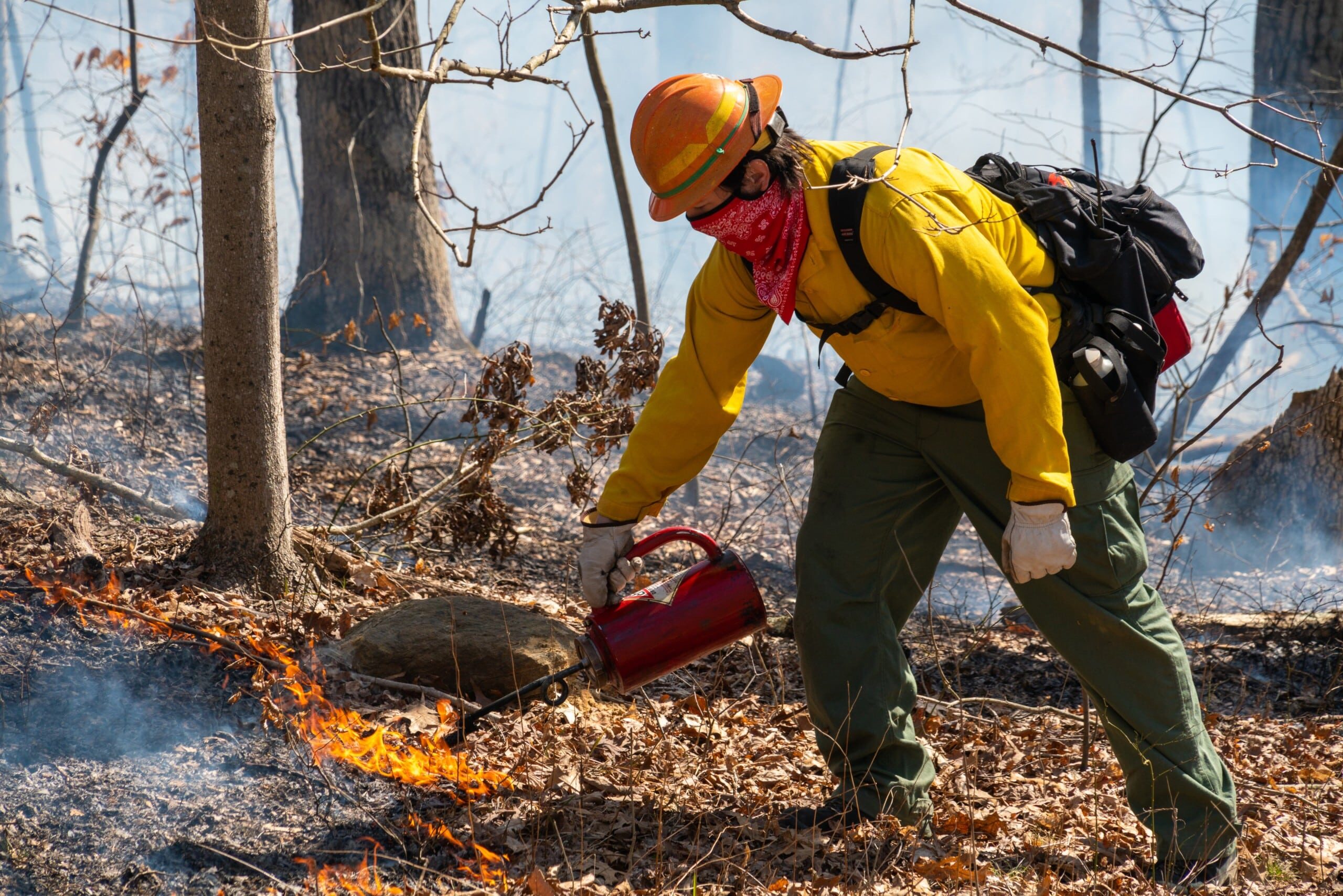
One important example is the use of prescribed burns, which might sound intense, but they’re actually one of the best tools we have for keeping local ecosystems healthy. These controlled fires clear out invasive plants, give native species room to grow, and help maintain the natural balance of the land.
In ongoing partnership with the Wayne National Forest, ORCA recently hosted a volunteer day to prepare for these burns. Volunteers ventured out to clear brush and vegetation around trail signs and culverts—basically creating mini fire breaks that help protect important infrastructure when the fires happen.
These efforts support a long-running rotational burn program in the Baileys, which has helped preserve the area’s oak-dominated forests for over 20 years. Without regular burns, fire-intolerant species can take over, shifting the entire ecosystem. Prescribed burns are a natural and necessary part of land stewardship—and thanks to volunteers, this behind-the-scenes work helps keep both the forest and trail system healthy and thriving for the long haul.
These environmental challenges are met with enthusiasm and support from local groups like Athens Bicycle Club and Boots on the Trail, among others. Their help is critical to the continued health and sustainability of the trail system, and ORCA always welcomes more volunteers.
Wayne National Forest & Community Stewardship: A Collaborative Effort
The Baileys Trail System sits on Wayne National Forest land, making the U.S. Forest Service a key partner in its care. While ORCA oversees trail maintenance, sustainability, and volunteer coordination, Wayne manages the broader landscape—including infrastructure like parking areas, as well as tree removal. This collaboration ensures the trails remain safe, accessible, and welcoming.
Dawn McCarthy, Wayne National Forest’s Engagement Staff Officer, who has been involved with the Baileys since its inception, emphasizes the importance of community involvement: “The idea that a bunch of different groups could come together to manage this trail system… that became the goal,” she says. ORCA shares this vision, believing the trails belong to everyone and thrive through shared stewardship.
Despite limited resources, both ORCA and Wayne remain committed to the trail system’s future. “We are still trying to make it better,” Dawn adds. “We’re working tirelessly to secure funding and increase volunteer participation.”
The Baileys Trail System stands as a testament to what’s possible through partnership, persistence, and a shared love for the land. Every volunteer, every act of care, helps keep these trails alive. When you hike or ride the Baileys, you’re not just enjoying nature—you’re experiencing the result of a community working together to protect it.
By lending a hand or supporting local efforts, you can be part of that story. These trails belong to all of us—and together, we can keep them thriving.
Get involved!
Groups and individuals can also schedule volunteer opportunities outside of these dates by contacting ORCA directly by email at info@orcaohio.com, or by phone at 740-677-0113. ORCA offers flexible scheduling and can tailor tasks to the group’s preferred difficulty level. ORCA will provide all necessary tools and personal protective equipment (PPE), and staff oversee the event.