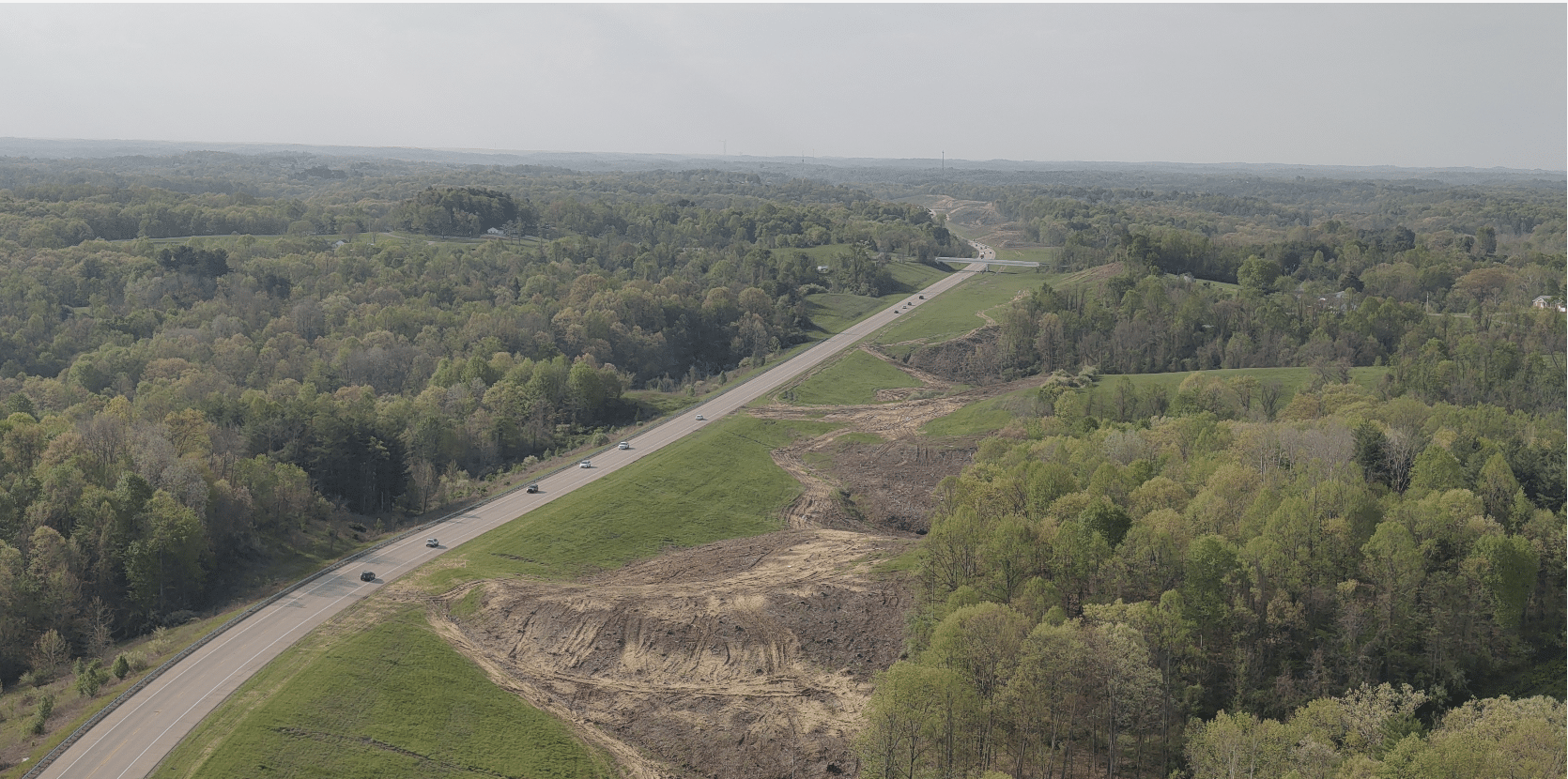

POMEROY, Ohio — With rock blasting set to begin this month for the U.S. 33 highway expansion project in Athens and Meigs counties, the Ohio Department of Transportation held a public meeting Sept. 10 to address questions.
The rock blasting is part of ODOT’s expansion of U.S. 33 from a two-lane to a four-lane highway between Athens and Darwin and Five Points and Ravenswood, West Virginia. Construction is currently underway and is expected to be completed in 2028, with blasting continuing for the duration of the project.
The meeting was held at ODOT’s office in Pomeroy, and ODOT will hold a public meeting on the same topic at its Athens County office at a later date.
This week’s meeting was brief, with seven community members attending alongside over a dozen ODOT staff members and contractors. There was no formal agenda at the meeting, and staff were available to speak with residents.
A representative of Kokosing Construction, the company awarded the $274 million project, said blasting would involve brief traffic stops of no more than 10 minutes throughout the duration of the project. Blasting will mainly take place around noon and 5:30 p.m., though it could occur during all daylight hours.
Rather than major explosions that break up large amounts of material, each blast that takes place is actually made up of many smaller detonations.
“It seems like it’s all happening at the same time, but it’s really not,” Keith Best, senior technical advisor for Sauls Seismic and ODOT’s blast consultant, said at the meeting. This helps prevent each blast from causing unintended damage beyond the blasting area.
“All you’re trying to do is break the rock up small enough so the big equipment that these guys have can move it,” Best said.
Everyone living within 1,500 feet of blasting should have been notified about the project and offered pre-blast inspections of their homes, Best said.
“Basically, it’s just for our guys to come in and document the condition of the surrounding structures,” Best said. “We don’t anticipate any problems, but it gives us a baseline to compare to for someone who thinks that some issues may occur.”
Best said residents living within that 1,500-foot radius will likely feel the blasting.
“If you’ve been contacted about pre-blast surveying, you will probably feel a blast,” Best said. “I’m not going to sit here and lie to you and say that you’re not going to feel it, because that would not be a true statement. Because you feel it does not mean that your home is being damaged. I assure you that. It takes a lot … to damage a home.”
For those who live closer to blast zones, contractors may ask permission to place seismographic equipment on their properties to measure the blastings, Best said. That equipment will allow contractors to ensure blasting meets ODOT’s requirements on acceptable vibration and pressure, thereby avoiding any property damage.
One Meigs County resident, who declined to share her name with the Independent, voiced concerns over potential damage to her property from rock blasting. She alleged her home was damaged from rock blasting during initial construction of the two-lane highway, which ODOT officials said took place in 2000.
The resident further alleged she was not compensated for the damage to her home — an experience she said she shared with neighbors. She also said she was not notified of the blasting that would take place in 2000 (though she said she did receive notice of blasting for the upcoming expansion project).
“I’m not against progress, but I just want you to know I’m scared,” the resident said.
Best said ODOT’s standards have been revised over the years and should protect against any property damage during the current construction project.
All blasts are videotaped, and contractors conduct visual inspections of nearby areas, including bridges and overpasses, to ensure no damage occurred, Best said.
Updates on the project are available on ODOT’s website for both Athens and Meigs counties.