CLEVELAND, Ohio — On Dec. 18, 2025, the Athens County Independent interviewed Victor Laverde Laguna, who is being held in U.S. Immigration and Customs Enforcement custody after he and his brother were arrested in Athens County.
Criminal charges against Victor and his brother, Gregory Javier Laverde Laguna, who has Down syndrome, were dismissed by an Athens County judge in November 2025.
Still, due to directives by the Trump Administration, a federal immigration court judge declined Dec. 18 to consider a request to grant the brothers bond. Therefore, the brothers have remained in ICE custody for months, most recently in the Northeast Ohio Correctional Center.
Dual citizens of Venezuela and Colombia, the Laguna brothers arrived in the U.S. legally as asylum seekers about a year before their September 2025 arrest.
Due to the toll of ICE detention, Victor advised his attorney Jan. 9 that he wanted to request voluntary departure from the U.S. He and his brother will seek departure to Colombia.
The brothers’ immigration attorney Liliana Vasquez told the Independent Jan. 13 the timeline for the brothers’ voluntary departure, should the request for voluntary departure be granted, is unclear. That’s due in part to ongoing upheaval in the region, following the U.S. arrest of Venezuelan President Nicolas Máduro earlier this month, she said.
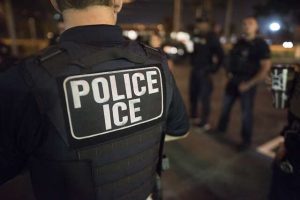
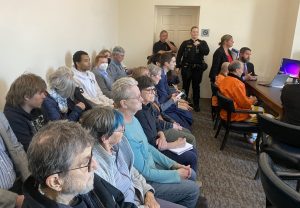
Interview with Victor Laverde Laguna
Victor Laverde Laguna’s interview with the Independent took place immediately following the Dec. 18, 2025, immigration court decision not to grant bond. The interview took place before Victor’s decision to pursue voluntary departure, and before the U.S. abduction of Máduro.
Vasquez translated Victor’s statements from Spanish to English. Speaking on his behalf, Vazquez occasionally switched between speaking in the third and first-person.
The Independent has shifted all statements into first person for consistency, and lightly edited the interview for length and organization purposes.
ACI: Could you share a little bit about the life that you were building with your brother in the U.S. before you were arrested?
Victor Laverde Laguna: When we came to the United States, it was with this dream in mind of having safety for myself and for my brother. Since this is a country of opportunity and we filed our asylum application as was required of us, we were waiting for the necessary time to apply for our legal work permit that would be granted to us based on the asylum application.
Aside from that, I had started to investigate schools that were available here in Columbus for [people] with Down syndrome. I wasn’t looking for a handout for me or for my brother. I just wanted a place where my brother could go to, so that he could continue to develop skills, if possible, that may allow him the opportunity to work, because I do believe he is able to work under certain conditions. And with him being enrolled in a school for people that take care of [people] with Down syndrome, it would also allow me to work and establish myself alongside my brother, and then, if in the future it was permitted, be able to bring my daughter into safety as well, and then reestablish ourselves in this country.
In our home country of Venezuela, life has been very difficult, given our political ideals, my political involvement, and the way I’ve spoken out against the current government … in Venezuela.


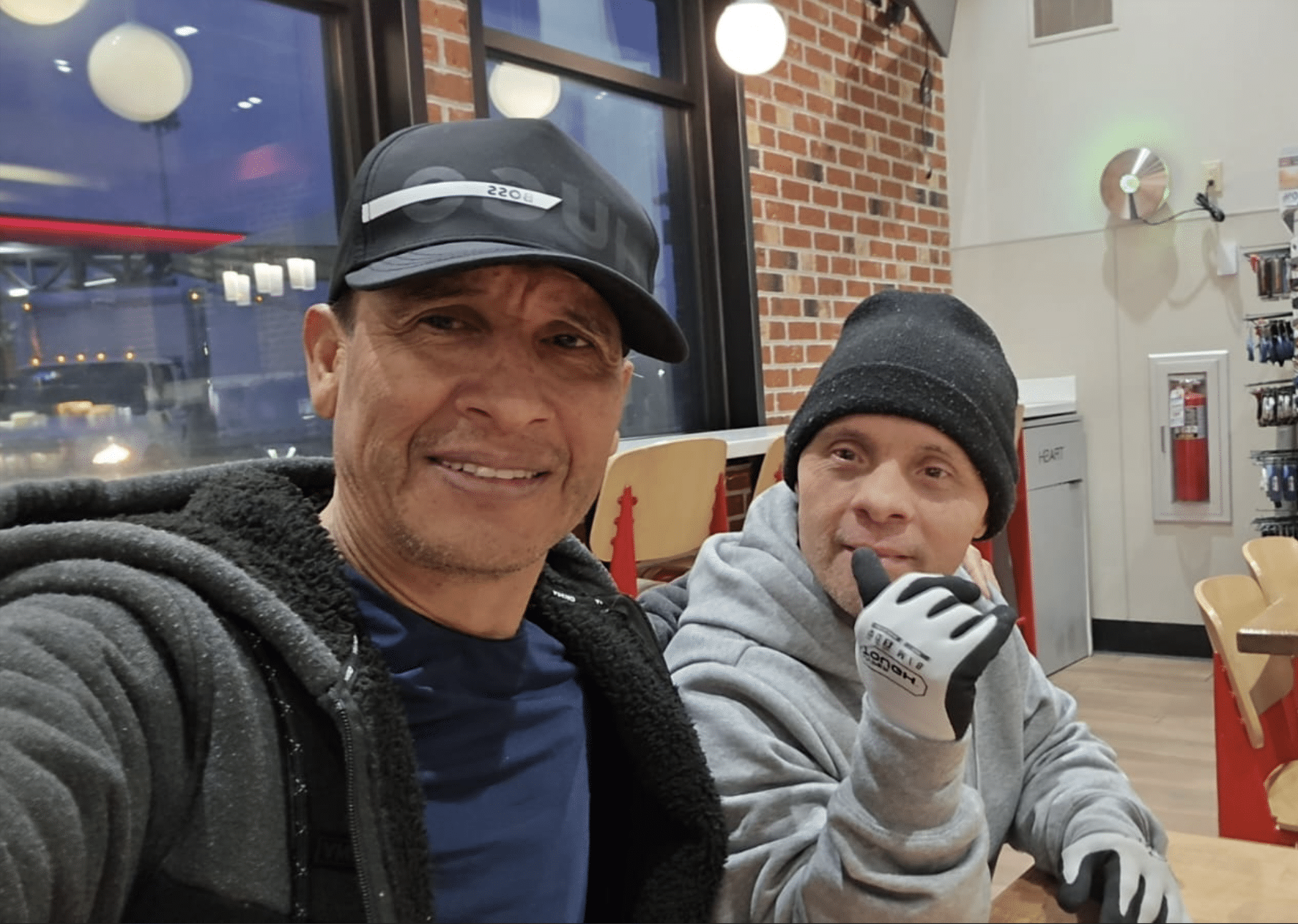
Photos of Victor Laverde Laguna and Gregory Javier Laverde Laguna. All photos were provided by Victor’s son via the brothers’ attorney, Liliana Vasquez.
ACI: Could you talk about the initial criminal charges that you faced and the dismissal of those charges?
Victor Laverde Laguna: Since the beginning, there have been violations of human rights. I am perplexed at how so many agents can operate with so much force towards an individual with Down syndrome.
[During the initial arrest Athens County law enforcement] they operated with so much malice and violence towards [Gregory Javier Laverde Laguna]. … I can defend myself, but to see them exert so much violence and force towards my brother who has Down syndrome, I cannot comprehend how they have the ability to do that. … On the day of the initial arrest, justice and the law enforcement agents made a grave error.
Liliana Vasquez (Victor’s immigration attorney): Victor had found a post on Facebook that was searching for individuals to make pickups and drop-offs of medical supplies, and so they would be sent through the phone where to go pick up the item, where to go drop it off. And so Victor was able to do this two times.
And on the third time that he did this was when this happened. So, on that third time, he goes, drops off the package that he was told was medical supplies. As he’s walking back to the car … he hears a shot, like a gunshot into the sky, and then several agents — like more than 15 — surround them.
Victor Laverde Laguna: I had five to six agents on me that pushed me to the … gravel. At that moment, or around the same time, other agents pull Javier, my brother, out of the passenger side of the vehicle and throw him violently to the … gravel. And Javier is reacting, is not understanding what’s happening.
So he’s saying some things, but nobody can understand him, because one, his speech is limited, and two, the agents don’t speak Spanish. And I was able to yell, ‘My brother is Down, my brother is Down,’ to give them an indication that my brother had Down syndrome, because I didn’t know how else to say it, and I was saying the phrase, ‘My brother is Down’ in English.
Once Javier is on the floor, two large agents with their knee on his back, are trying to handcuff him, and Gregory is yelling for his brother, and he’s moving around, he’s squirming around because he’s not understanding what’s happening, and I am trying to calm him down, but also yelling at the agents, ‘My brother is Down.’
What they do is, one agent grabs Gregory’s legs and pulls him while another one does the same to me to separate us. … That caused me to have my patella dislocated — it seems like it’s dislocated. It hurts me and it’s swollen. I also have a fissure on one of my shoulders. … And when that happened to me, I was able to lift his head so that my face was not dragged. I was able to lift my head and lift my knees so that those body parts were not exposed to the gravel, but Javier, because he is limited in that capacity, was dragged, and his knees and his face were scraped along the gravel. After that, we both were subdued and put in the back of a car.
I gave them my phone and explained what my situation was, and I could see the agents kind of realizing that we were innocent, that a mistake had been made, but all of this had already been done. And so in my mind, I was thinking, ‘OK, they’re gonna realize that this is a mistake, and then they’re gonna let us go.’ But then that never happened.
We were taken to the jail and placed in a very cold cell. I asked for a blanket for Javier, for something to clean Javier’s face, because he was bleeding from his face and his knees.
Nothing was provided the first time that they went before the judge. Javier was bleeding from his face, and I thought, ‘OK, once the judge sees the condition of Javier, and the medical, the state that he’s in, and his Down syndrome condition, this will all be OK.’
I had hoped that somebody would realize what was happening, but the judge never acknowledged any of the injuries to us or Javier’s condition, not even the fact that an individual with Down syndrome does not have the mental capacity to commit the crimes that we were being accused of. I had hoped that somebody would kind of catch this, and yet no one did.
So it’s been perplexion, confusion, awe, disappointment at the fact that violation after violation of human rights have been committed, and it seems like there have been opportunities to rectify the situation or to stop, but yet nobody has done so. Nobody in the proper place of authority to stop the continued violations of human rights has opted to do so.
… And, the legal parameters that exist have been violated. I was in a criminal proceeding. That is when ICE came in and took me. That’s the reason why I have been detained as long as I have, because under the criminal proceeding, … I was going to be released from jail upon dismissal of the charges. However, a call was made, and in the early hours of the morning I was just taken from the jail and put into ICE custody.
That should not have happened. ICE should not have intervened until my criminal proceedings had been finalized.
But that call is what has continued to perpetuate the violations of human rights. It has been a constant perpetuation of the violations of human rights, because nobody has taken the time to really evaluate this case and remedy everything that has been done to me and to my brother.
ACI: Could you describe the conditions you’ve faced during your detention?
Victor Laverde Laguna: Once we were detained, we were sent to [Southeast Ohio Regional Jail]. We were housed with individuals that were very dangerous. … There are so many individuals that were facing [charges for] serious, violent criminal acts that they had committed, and I could not understand how they could house my brother with these individuals.
My brother is an individual with Down syndrome. He does not have the opportunity, the ability to comprehend when someone is trying to hurt him. Because of his same condition, individuals that are mentally unstable or that have the malice to attack vulnerable individuals see my brother as an easy target. So when we were at [SEORJ], we would go a couple of days without showering because I did not want to expose my brother to any sort of harm.
After that, we were transferred to [Butler County Correctional Complex], and in [Butler County], it was worse, because every single day there was fighting between other inmates. There was one individual that it took 15 officers to take them down, and this was after he had been violent towards other inmates. And at [Butler County Correctional Complex], I was scared that I was going to have to fight someone to defend my brother, because I am willing to give my life for my brother.
Throughout this time, I was thinking, ‘how has no one noticed? How is it possible that my brother can be detained with individuals that are this violent, that are this aggressive? Where is the justice? Why is nothing being done?’
I did a hunger strike for three days hoping to get my brother released. His incarceration was just not appropriate. It was not appropriate from the beginning, and it was just not right, once the charges were dismissed.
But after three days of doing my hunger strike, I was threatened that if I continued with the hunger strike, they would separate me from my brother. So I stopped the hunger strike because at least alongside my brother, I could defend him, and I would have no control or no way to protect him if we were separated.
I sent a lot of messages … to jail personnel regarding the danger that my brother was facing being detained. One employee asked me to write a very long letter, and I did. I wrote a very long, detailed letter about everything that my brother was being exposed to, and at the end, I don’t know what happened to the letter. They might have just thrown it to the trash, because nothing ever came of it with every single message that I sent, nothing was done. There was no humanity in that place. I witnessed the lack of humanity that exists for individuals with Down syndrome. [Gregory Laverde Laguna] is someone that should not have touched the jail.
After [Butler County Correctional Complex], we were transferred to [Northeast Ohio Correctional Center]. Right now, we are in a unit with other Hispanic individuals. So it is better in comparison to all the other institutions that we have been to, but there are still regular episodes of yelling and fighting among the inmates. There was a rumor that there was an individual that was murdered. So all of this still worries me for the safety of myself and especially my brother.
What point do we have to get to for my brother to be released? This is just inhumane and it is unjust. As I repeat, my brother should have never been incarcerated, and … he should never have been treated with the violence that he was from day one.
Officers never stopped to question if we were involved in the crime that we were being accused of. There was nothing done on their part to investigate if we really were the guilty people that they were looking for.
There was an incident at [Butler County Correctional Complex] where there was a man, a very violent man, that would approach Gregory with a stick, and I really felt that I was going to have to fight someone.
Luckily, we were moved. We were transferred to another place. But it was with people that had mental issues with violent tendencies.
It seems that people here don’t understand what having Down syndrome is, versus having another violent mental issue. My brother with Down syndrome, he just can’t identify danger.
Whereas the other individuals that have mental issues with violent tendencies, they look for individuals to attack. They have malice. Sometimes it’s premeditated, sometimes it’s not. … You cannot house people with these different conditions in the same place, because you’re putting a very vulnerable person with a person that will attack that vulnerable individual, in this case, my brother.
At [Butler County Correctional Complex], it was basically every day that an individual that was having mental issues would approach my brother with a broomstick in hand, and I would have to intervene and put myself in between them so that he would not hurt my brother. With every encounter, I was scared that he was really going to do something to my brother if I didn’t catch it in time, or he was going to do something to me for intervening.
As a result of this man who would basically every day approach Gregory with the broomstick, I opted to not go out from our cells to avoid the violence.
However, all of this was very deteriorating for Javier. Him seeing the violence, hearing the constant yelling, seeing the officers forcefully take other individuals, subdue and take other individuals violently — this was very emotional taxing on Gregory, as he does not have the ability to comprehend this type of behavior, primarily because he’s never been exposed to it.
ACI: What has it been like emotionally for you to be incarcerated, and to see this happening to your brother?
Victor Laverde Laguna: I have felt very hopeless with my hands tied because there is nothing that I can do. I have seen here that violence just incites more violence, so I can’t really do much to protect my brother, but obey whatever orders I am given.
Obviously, this has been emotionally taxing on me as well. Seeing my brother cry every single day — that definitely affected me, and on several occasions I would just turn my head, so he would not see me cry, because with my mom and our father both gone, I am the only one that he has left. And he is the gift that they have given me. So it is my job to protect him and take care of him and stay strong for [him]. All the while, I don’t understand how capable, educated people have treated him.
They dressed him up as a criminal, they changed him. They chained him all over his body. They displayed him in open court. This was not only a violation of every single one of his human rights, but abusive and humiliating.
I don’t understand how they have the capacity to do this to somebody like him, especially when I have asked them, ‘What danger does he pose to anyone? What is the need for chaining him on his feet and his waist and his arms?’ There’s no need for that, and I cannot comprehend how that was allowed to happen to him in this country that is looked on as a progressive country that protects individuals, especially individuals with Down syndrome like him.
One of the ways that we have been able to endure this, is that every single day I have told Gregory a new story, and on the walls of the jails that we have been at, I have painted drawings to keep him distracted from what is going on, because that is my job as his protector to cheer up his life when everything right now in our life is gray and black.
So if anybody had the opportunity to go look at the walls, you would see that it looked like a little preschool where I drew on the walls, pictures and different things that I would use to tell him a story.
The food here has been another issue. He requires a special diet, and when I began taking care of him, I became a chef to provide for him the foods that were best. So we have really limited the food that we intake here. It affects him and it affects me as well.
Vasquez told the Independent Jan. 13 that she is working to submit the brothers’ request for voluntary departure to Colombia. At their Dec. 18 hearing, the immigration court judge scheduled the brothers for a March 9 hearing. Vasquez told the Independent the brothers are trying to secure an earlier hearing.