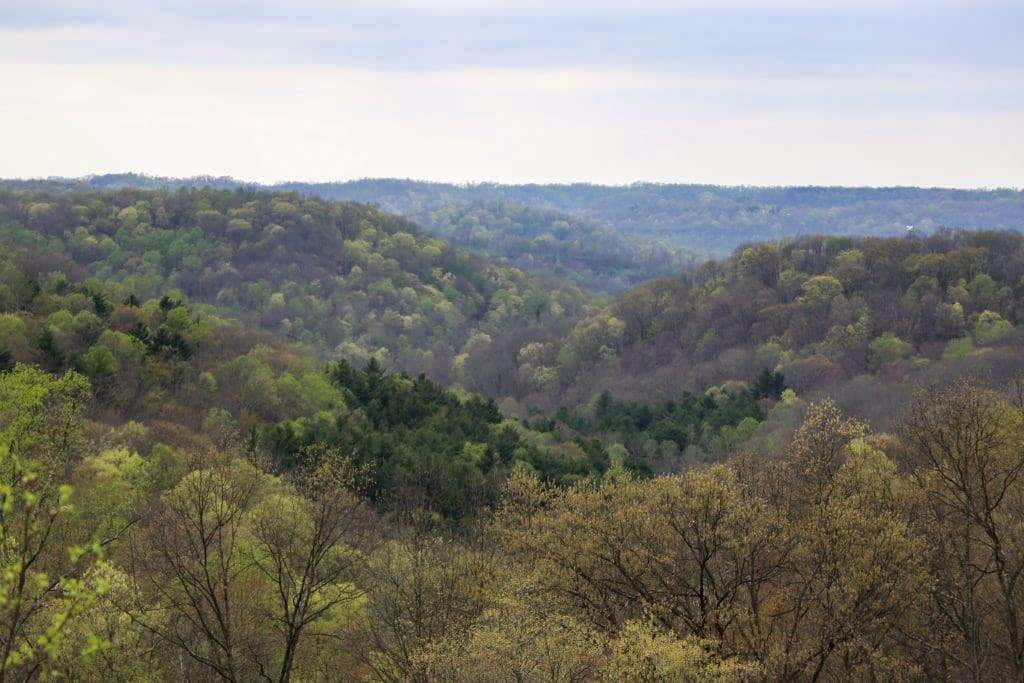
NELSONVILLE, Ohio — Area residents have until May 17 to comment on a Bureau of Land Management environmental assessment that recommends allowing fracking on about 40,000 acres of the Wayne National Forest in Monroe, Noble and Washington counties.
The environmental assessment will be used to evaluate oil and gas leasing requests in the forest’s Marietta Unit, including leases for both conventional oil and gas wells and fracking wells.
The forest service has previously allowed drilling in the unit; currently 3,020 oil and gas wells are located on national forest land within the Marietta Unit alone, the assessment says.
Because fracking is a relatively new extraction method, however, it was not considered in previous environmental assessments used to evaluate leasing requests. Fracking wells have increasingly come to dominate oil and gas extraction since 2012.
But new oil and gas leases in the Marietta Unit have been on hold since a legal battle over the BLM’s 2016 environmental assessment. If the new assessment is officially approved, that will change; new fracking leases may be approved in the Marietta Unit.
A previous report cited in the assessment estimated that new fracking leases would result in the installation of up to 29 fracking well pads, supporting up to 81 fracking wells, within 15 years.
Fracking involves horizontal drilling beneath the earth and the injection of millions of gallons of water at high pressures to create fissures in rock, allowing gas to be extracted. This method is substantially more resource intensive than conventional drilling and creates toxic byproducts, which are injected deep underground.
The BLM environmental assessment explains that fracking within the Marietta Unit could increase greenhouse gas emissions and disturb up to nearly 1,000 acres of land (including sensitive wetlands and riparian areas), affecting its ecology. The extraction itself, plus runoff and spills, could affect groundwater, surface water and aquatic life.
The analysis recommends opening the Marietta Unit to fracking anyway.
The environmental analysis does, however, create guidelines to mitigate harmful effects on bats, mussels and rare plants — for instance, avoiding development in rare plant habitats.
The Bureau of Land Management has been legally required to promote oil and gas development on public lands since 1920, the assessment says.
“It’s sort of an out-of-date statute, given that we’re facing a climate crisis, and these technologies are becoming more and more destructive and polluting,” said Wendy Park, a senior attorney with the Center for Biological Diversity.
Fracking is “totally incompatible with how people want to enjoy public land,” she added.
Environmental assessments are necessary for the BLM to evaluate and create individual oil and gas leases. BLM officials first drafted an environmental assessment that explicitly recommended allowing fracking in the Marietta Unit in 2016; 65 leases for fracking were granted after that environmental assessment.
However, four conservation groups challenged the 2016 assessment in court, including the Center for Biological Diversity, the Ohio Environmental Council, Heartwood and the Sierra Club.
In 2020, a judge determined that forest officials failed to consider various environmental factors, including impacts on surface area disturbances, the Indiana bat, the Little Muskingum River and air quality. The judge ruled that no new leases could be granted under the 2016 environmental assessment.
The new assessment attempts to correct the prior assessment’s issues, but the proposed action to open the forest to fracking remains unchanged. Park wondered if that decision resulted from “bureaucratic momentum,” given existing leases for fracking in the Marietta Unit.
“Comments that present specific or missing items are particularly valuable to us as we strive to have the best possible environmental analysis,” said BLM Northeastern States District Manager Pamela Mathis in a press release.
Park said she hopes the BLM “will hear the voices of people who love the Wayne loud and clear, that they don’t want fracking in the Wayne, that public lands should be for everyone and not for sales or profits.”
If the BLM does not adjust its recommendation to allow fracking, Park said the Center for Biological Diversity will “consider all options.”
“We’re going to do whatever it takes to keep the Wayne free from fracking,” she said.
A media representative with the BLM did not immediately respond to a request for comment by press time. The public comment period, which has been underway since March 20, will continue until May 17. Comments may be submitted online.