
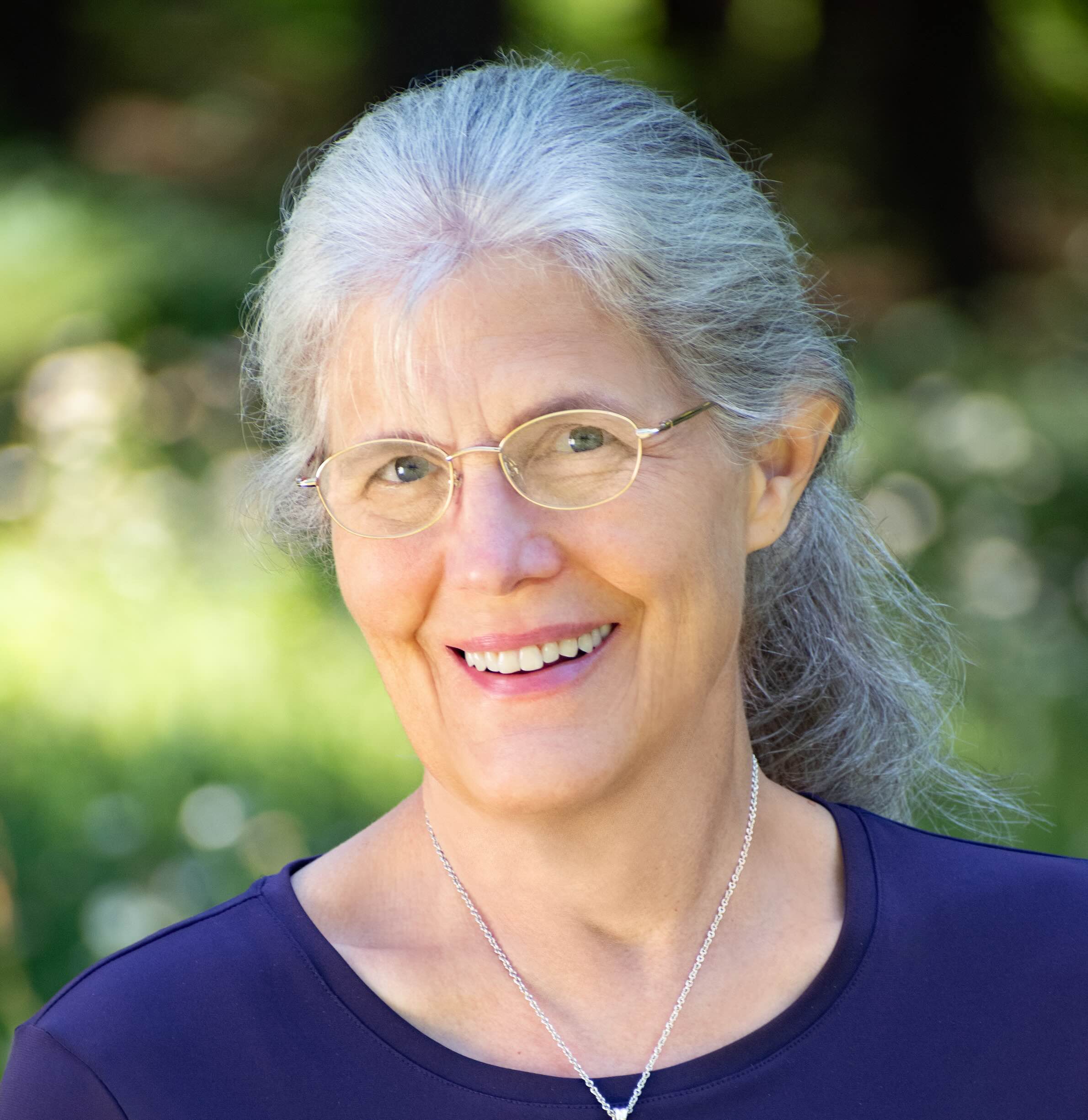
94TH DISTRICT, Ohio — Wenda Sheard is running for Ohio House District 94 and wants voters to know that she is committed to working for them, not corporations.
Born in Cincinnati, Sheard told the Independent she was raised near Shaker Heights in northeast Ohio and graduated from Cleveland State University’s school of law.
She moved to Athens after graduation in 1979, she said, “because I wanted to live in a less populated rural area.”
The Independent sat down with Sheard on Aug. 20 to talk about her campaign, her politics and what she hopes to achieve if elected. The interview has been edited for clarity and brevity.
What are the biggest influences on your political beliefs?
[The biggest] influence on my political beliefs is the belief that we must care for all people. That all people have a right to a good life.
Affordability has become a major topic of discussion nationally. If elected, what policies would you support to help local residents with affordability?
I think the first thing we need to do is to reverse some of the laws and policies that our current supermajority Republican legislature has passed that benefit the wealthy at the expense of the rest of us. There is no excuse for the flat tax passed by the Ohio legislature, which instantly gave the millionaires a big tax break and gave no break to anyone earning under $26,000.
There’s no excuse for the way the current legislature has refused to fully and fairly fund our public schools and shift the tax burden from businesses, commercial ventures and commercial properties onto families and farmers. The tax burden has shifted so dramatically that families are voting on school levies they can barely afford, and schools in Ohio are having to put more tax levies on the ballot in Ohio than in any other state.
There’s also the electricity bills that have gone up. We are still paying on the corruption surrounding the House Bill 6 bailout, also known as the First Energy scandal.
I want to lower the costs. We need to take suggestions from our county auditors as to how to make those property taxes fairer for the people, and yet also support our schools and roads the way we want them supported.
The oil and gas industry – more specifically, fracking and fracking waste injection wells – have attracted national attention. The City of Marietta has called for a moratorium. Athens County had its own encounters with injection wells, and several wells recently voluntarily suspended their operations. What is your stance on this issue?
We definitely need a moratorium on injection wells in Washington County.
We need the moratorium because the city of Marietta and five water boards in Washington County and two township trustee boards and one village council have voted for it. We need it because we need time to study the dangers, and the dangers have been increasing.
How do you feel about Ohioans’ concerns about data centers? Is there a way to address them through the legislature?
Yes, there is a way to address the data center concerns through the legislature. The Democratic minority in the Ohio House and the Ohio Senate didn’t pass it, but [they] introduced a series of bills to address all manner of things related to data centers. That was back in February.
I think all of those bills need to go to committee and have hearings where the public can speak up and give their thoughts on how Ohio should regulate data centers and what tax breaks, if any, should be given or not given to data centers.
The prospect of a Canadian plastic company building a plant in Athens County has split residents between economic development on one end and environmental sustainability on the other. Where do you land on that spectrum?
I land in making sure whatever development happens in Athens County is what Athens County people want. We’ve got to make sure that whatever development comes here is safe for our environment and will not harm our county in the long term. There are many concerns about plastic plants, and we all need to be learning more about that.
Decisions about economic development need to be made by the people in the area, not by people far away, not by people in foreign countries. We need to have control over our own economic development and the choices we make as to what we want in our county.
There’s been a push in Ohio to ban property taxes outright, while other groups have called for the state to increase its support for local governments and local school districts. If elected, what policies would you support regarding Ohio’s tax code?
I would support taxation policies that are fair. Taxing someone out of their home is not fair. Taxing someone so much that they can’t afford health insurance is not fair. Failing to tax the billionaires and the large corporations in the manner to which they can and should pay is not fair. Failing to tax the injection well owners sufficiently is not fair.
Fair tax policy requires that we all have the government working for us, and that we are not working for the government.
In Ohio, measures often are passed in the legislature along defined party lines. Residents have expressed frustration that their representatives can’t seem to work together. What would you say to prospective voters on this point?
I think the divide in politics today is not so much left versus right, but it’s the billionaires and large corporations versus the rest of us. I believe I need to work for the people and not for any donor, not for any political party, not for any corporation.
I think it’s possible. It’s always possible to sit down with another human being and reach common ground. That’s what I intend to do. I want to work together to reach common ground.
My experience as a trained mediator, a trained and court-appointed mediator, will help me reach common ground and get legislation passed that is for the people.
Ohioans passed two constitutional amendments aimed to end gerrymandering by mandating that districts yield representatives that reflect the overall presidential vote statewide. But the state’s Congressional delegation is only 25%, even though Kamala Harris took 44% of the vote when running for president in 2024. Do you have any concerns about the state of Ohio’s electoral districts?
We’ve got big problems because of gerrymandering, and I would like Ohio to adopt a district map drawing system such as the one in Michigan. [In Michigan], they have a carefully selected group of people to work together to draw the maps, not based on politics, not based on which politician lives where, but based on common sense. Then hopefully we will truly get maps drawn where voters will actually be able to pick their representatives rather than the representatives picking their voters.
Ohio’s House and Senate maps have equally been accused of political bias in their drawing. This includes Districts 94 and 95, which split votes from the Democrat base in the City of Athens. What would you say to local constituents who are displeased with gerrymandering in the Ohio legislature?
I would say that what happened to the county of Athens is crack and pack. They cracked the county to take the city of Athens out and dilute the voting power of the Democrats by adding that city of Athens, and they had to take three other townships to connect it with five other counties, so that the power of those Democrats is diluted.
I understand that, and what I say to the people is to elect people of whatever party you want, so long as those people are committed never to gerrymander maps again. Both parties have been guilty of gerrymandering throughout time.
It’s gotten worse when we’ve got computing power. It’s gotten much worse recently, and I think we need people of both parties, Republican and Democrat, to be committed to never doing that kind of behavior again, where the politicians pick their voters.
A sizable number of university students and academics live in our district and have been affected by SB1 and other changes the Ohio legislature has made to higher education. This has raised questions about the legislature’s involvement in deciding curriculum and university support structures. Where do you land on this issue?
I want universities to make their own curricular decisions. I want workers inside universities to be able to have their own unions, not SB1, which has limited university unions from bargaining for the terms and conditions of employment.
I mean, what’s the point of a union if you can’t bargain for terms and conditions of your employment? We’ve got to go back to where the legislature stays out of the business of academia.
The Ohio Supreme Court repeatedly found that Ohio’s method to fund public schools was unconstitutional, but large disparities remain between wealthy and poor districts. What do you think about this issue?
There was a bipartisan bill, the Cupp-Patterson bill, that was supposed to give us fair school funding that would meet the requirements of the Ohio Constitution to have a thorough and efficient system of common schools. We thought that would work, but the current legislature decided to decimate the bipartisan Cupp-Patterson bill.
Our schools are suffering now, and they’re going to suffer a lot more unless we get legislators elected who are committed to the bipartisan Cupp-Patterson bill and fully funding our public schools.
I want the legislature to focus on issues that they alone can focus on. We can give the issue of curricula lower to the teachers and the school boards in our local communities. Education is better when the schools have the ability to vary the curriculum based on the needs of the child, based on the needs of the community.
Our region has challenges with economic development and a lack of job opportunities. Are there any steps that you would like to take to address this issue?
I would like to have a mechanism for more public input into economic decisions. We need to end the abuse of non-disclosure agreements.
I know that the law says trade secrets can be kept secret, but the problem is trade secrets are supposed to be like recipes and manufacturing processes and other things. I don’t believe trade secrets should be the plan of a company to come in and change the landscape of a community.
Far too often, we’ve had industries come in and pillage and rape our community, what with coal, now injection wells, and maybe data centers. We’ve had a lot of people making decisions about what economic development we can have that ultimately does not benefit the people in our community.
Many residents have been severely affected by cuts to programs such as SNAP and Medicaid. Do you think some of these program cuts might have gone too far? And what would you say to concerned constituents?
I believe the program cuts have gone too far, and they’re going to go further. We all know what’s going to happen after the midterms if things don’t change. Some of the cuts on a federal level, for instance health insurance, are scheduled to take place in January 2027.
I don’t want to see rural hospitals closing. Some are at threat of closing when they can no longer sustain themselves based on the population not having the insurance it needs to actually pay the bills, we’ve got that problem.
The cuts have gone further than they should when we have starving children. We have to think about how we care for each other as human beings and how our government should be there for the people.
The Ohio legislature has altered parts of the constitutional amendment legalizing cannabis that voters passed in 2023. Ohioans have accused the legislature of trying to subvert the will of the voters. Do you support the legislature changing Ohio’s marijuana laws?
Once the citizens pass a constitutional amendment, the legislature has a duty: They’re bound by oath to uphold the Ohio Constitution. The legislature should not violate that oath, and by trying to change the constitution via legislation, they are violating their oath.
How will you make yourself available to meet with constituents, and how can constituents contact you?
My cell phone number is on my website. I don’t answer my phone unless you’re in my contacts, but I always invite you to text me, and then I can call you back.
I also have my email available, my campaign email (FriendsofWendaSheard@gmail.com), and my personal email, and of course I’ll have a government email once I’m elected.
I want to have town halls. I want to spend my recess time back here listening to voters in all three counties of the 94th District.
What’s one policy that you would want to take lead on?
The one that seems to be an obvious emergency because it involves drinking water would be a moratorium on injection wells in Washington County. That is a matter of the survival of the community or the non-survival of that community.
I’ve suggested to public officials in Washington County that they go ahead and calculate the cost of trucking in drinking and bathing and cooking water into Washington County. It’s a staggering figure.
We can’t be sacrificing a whole community, especially a community that was the first, if not one of the first communities settled in this state by European settlers.
How would you describe your political identity?
I’m running as a Democrat. I’ve worked for 21 years directly under Republican judges in the court system as a law clerk, staff attorney, and domestic relations magistrate.
I like to think that even though we have a two-party system and it’s very hard to run as an independent, I like to think that I will be there for the people and not for any political party. I’m there for the people, not for the billionaires, not for the large corporations, not for the donors.
Is there anything we haven’t touched on that you think is important?
I want to let everyone know I am a Democrat. I believe in all the great progress that Democrats have made over the past century, but I know that neither party is perfect.
We’ve gotten to a point where people are frustrated by both parties, and in an effort to improve my own party on the state level, I ran for state central committee and one I was unopposed, and I intend to help improve the Democratic Party.
I hope friends of mine who are Republicans will do the same with the Republican Party, and I hope we eventually get ranked choice voting, so perhaps people will have more choice.
