The deadline to register to vote in the Nov. 3 general election is Oct. 5. Find more information via the Athens County Board of Elections.
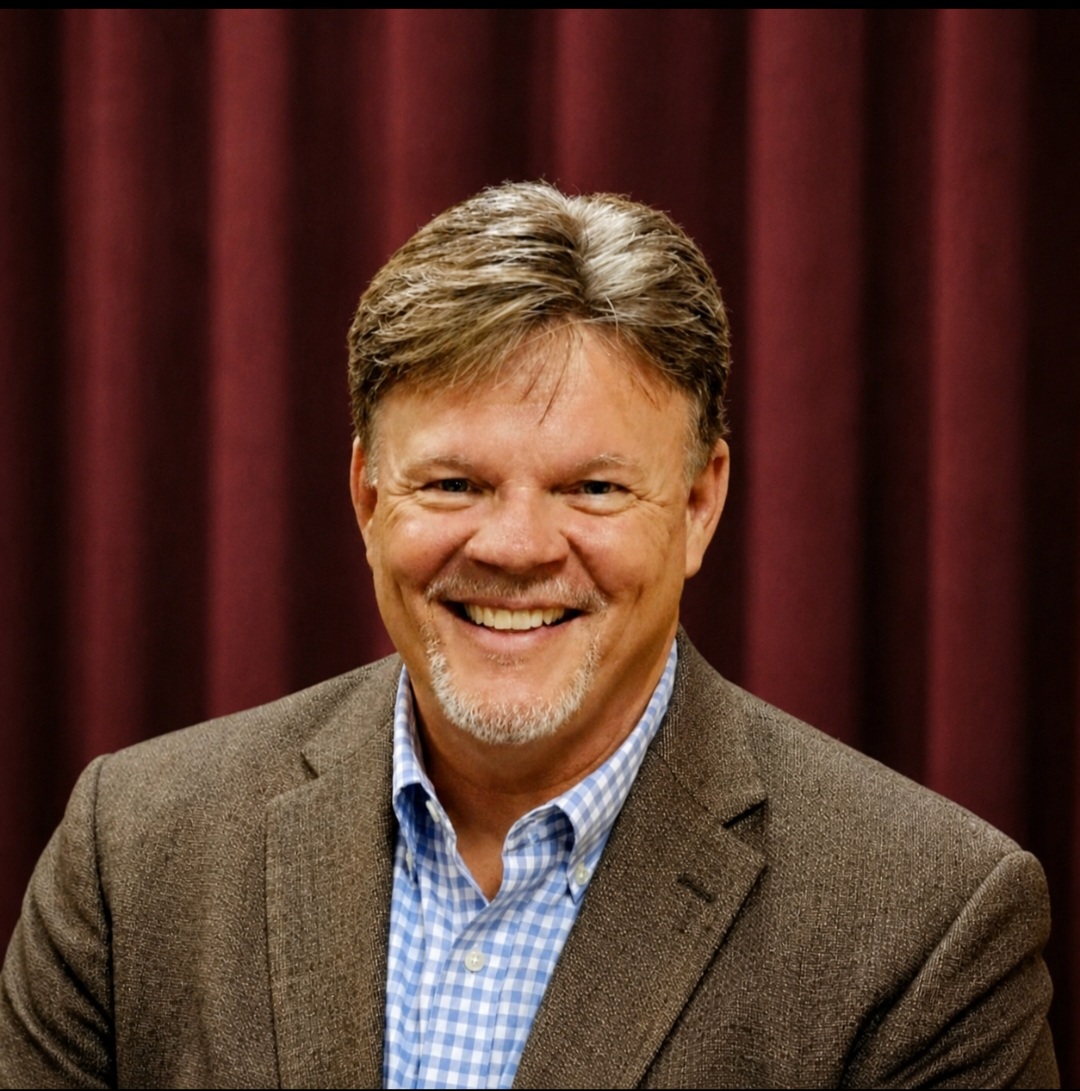
94TH DISTRICT, Ohio — Kevin Ritter is running for re-election in Ohio House District 94 and wants voters to know how hard he fought for them in the legislature.
The Independent interviewed Ritter about his campaign Aug. 21, a conversation that has been edited for clarity and brevity.
Could you talk a little bit about your background?
For 25 years, I did two things. I was a teacher. I taught [history] at the high school and college level, and I also owned a sports development organization. We prepared amateur baseball players for the draft and for college baseball. [I then] served six years as a county commissioner in Washington County before I chose to run for the state House.
How did you come to live in this area?
I was finishing graduate school, and my wife was finishing law school, and I said ‘I can look for a job wherever we’ll go wherever you get the best opportunity.’ We didn’t expect that it was going to be in a small town, but when we came to Marietta, we just really enjoyed the area, liked the people and we decided to come here. That was about 25 years ago.
What are the biggest influences on your political beliefs?
Family is certainly a big influence. The church is a big influence.
There are some writers that I’ve enjoyed, Russell Kirk, Richard M. Weaver, Robert Putnam, and Robert Nisbet. Those are some of the works that I’ve enjoyed, but my political outlook really comes from practical experience, being a small-business person trying to navigate the rules that the government puts in place.
Affordability has become a major topic of discussion nationally. If elected, what policies would you support to help local residents with affordability?
I think one of the things we can do immediately is finish what’s been going on in the legislature for almost a decade, and that’s getting rid of the income tax in the state. We have the second-lowest income tax rate in the country. We’re at 2.75%. I think we can take that to zero. Obviously, that’s going to leave money in people’s pockets.
When we talk about things like housing, a lot of times the barriers to building new housing exist at the local level. It’s the fact that a community doesn’t have the money to spec an area. What I mean by that is it’s very difficult for Washington County to say we’re going to put sewer into this community to try to attract builders. So, I think we at the state level need to work with local leaders to identify grant monies to try to bring some state investment dollars, so that we can turn the little bit of flat ground we have into site-ready areas for things like housing.
The oil and gas industry, and more specifically, fracking and fracking waste injection wells have attracted national attention. The City of Marietta has called for a moratorium. Athens County had its own encounters with injection wells, and several wells recently voluntarily suspended their operations. What is your stance on this issue?
This is an issue that I’ve been [working] on for over six years. It was first brought to my attention when I was a Washington County Commissioner. I first contacted ODNR to let them know about local concerns over six years ago. I think the Ohio Department of Natural Resources has done a poor job providing answers for folks.
I mention ODNR because they’re the body that both issues the licenses and then does the inspections, the monitoring to make sure that wells are safe. I wrote an email to Eric Vendel, the head of the oil and gas section of ODNR. If you’ve read it, I was frustrated with him because I think ODNR has not done enough answering people’s questions.
The last time that ODNR held a public meeting in Washington County, it was at my request when I was president of the board of commissioners. When the Ohio EPA held a public meeting in Washington County in 2025, that was at my request.
Would you support a pause on new injection wells in the county?
Other people have asked me that since the 2022 rules went into effect, there have been no new requests for permits. So what I’ve told folks is there’s basically a moratorium in place already. If people are not asking for permits, that’s the definition of a moratorium.
How do you feel about Ohioans’ concerns about data centers? Is there a way to address them through the legislature?
First, the tax abatement issue. I don’t know if you’re aware. In the last state budget we voted on, we being the folks that voted for the budget, we voted for no tax abatements on sales tax for data centers.
Unfortunately, the governor used this line-item veto and vetoed that. So we’re looking now at going back and possibly overriding that veto or introducing new legislation. I don’t think the big data centers ought to be getting tax abatements. They have plenty, plenty of money.
When it comes to water, when you talk about data centers, there are many, many different models. So some of the criticisms you hear may or may not apply to the one that’s going into your area. The one that’s going in in Washington County will be a closed loop system, and what we’ve learned about that closed loop system is they’ll use far less water than the local golf course. So you really need to look at the individual model.
I think that what’s important is that we at the state level force the data centers to be transparent with the people, right? The local people should get to decide whether or not we want [a data center] in our backyard, but the state needs to make sure that they’re transparent. So, how much water are they going to use? How much energy are they going to draw?
The prospect of a Canadian plastic company building a plant in Athens County has split residents between economic development on one end and environmental sustainability on the other. Where do you land on that spectrum?
We’ve made enormous strides in terms of protecting the environment just during my lifetime. I remember when I was young, we were dealing with dirty rivers. We were dealing with discharge into the environment. I think the creation of the EPA at the federal level was an important development in government.
What I know about the state EPA is they tend to have stricter rules than even the federal government. So quite often, we meet and exceed the standards that are set by the feds.
I trust the Ohio EPA to establish rules that are going to protect that environment, but I think those rules need to be cognizant of the fact that we do want to develop business.
There’s been a push in Ohio to ban property taxes outright, while other groups have called for the state to increase its support for local governments and local school districts. If elected, what policies would you support regarding Ohio’s tax code?
Ohio has more taxing authorities than any other state in the union. Part of that is because of our history. I think we need to begin collapsing those taxing authorities, right?
I think the Ohio citizen feels like they’re taxed every time they turn around, and if we can begin collapsing some of those taxing jurisdictions I think it would be more transparent.
With regard specifically to the property tax issue, I don’t like those any more than the next person. I’m a property owner. I pay taxes on my home.
What I don’t like about this citizen initiative is it would get rid of them overnight. That would defund basically all of our local services. I’m all for moving in the direction of getting rid of property taxes, but just as they have gone up incrementally, I think they need to be brought down incrementally.
So I would love to see us put in place maybe a five-year outlook where we’re cutting them each year, but I don’t think you can defund the schools, libraries, local police and sheriff’s departments overnight.
Looking at increasing the Local Government Fund is something that I’ve wanted to do for years. I was a county commissioner when that fund was cut. I think we need to look at increasing that again.
In Ohio, measures often are passed in the legislature along defined party lines. Residents have expressed frustration that their representatives can’t seem to work together. What would you say to prospective voters on this point?
I would say that appearances don’t always match reality. You know, one of the things that was surprising to me when I went to Columbus, I thought it would look like Washington, D.C., where it was incredibly partisan. I found that I get along very, very well with the other side.
Tristan Rader is a Democrat from the Cleveland area. We’ve been talking about the environmental issues that we’re dealing with here in Washington County. He’s been very helpful to me. Christine Cockley, a Democrat from Columbus — she and I co-sponsored a bill together that I think is going to get signed by the governor before the end of the year.
Obviously, it’s up to the individual member whether or not they want to engage the other side, but I think there’s good ideas on both sides. I’m happy to sit down with folks on the other side of the aisle and talk about issues.
Gerrymandering is a problem nationwide. Ohioans passed two constitutional amendments aimed at ending gerrymandering by mandating that districts yield representatives that reflect the overall presidential vote statewide. But the state’s Congressional delegation is only 25% even though Kamala Harris took 44% of the vote in 2024. Do you have any concerns about the state of Ohio’s electoral districts?
I don’t think that what we’re seeing in Ohio is dissimilar from what we see in other Republican and Democrat states. Right. If we go to some of the more Democrat states, we’re going to see lines drawn in in a similar way.
I know people would like what they consider fair. I would challenge anybody to tell me how to draw those lines, right? Politics is a competitive sport, right? When you have that majority, you use that to your advantage, and Democrats do that just as do Republicans.
I think that there’s some work that can be done about some of the absurd districts that we see. I think there ought to be an appeals process, but in general, I don’t know that there’s a better system to draw lines than that which we have now. I’m certainly open to hearing from people if they have a better system. I just don’t yet know what that is.
Ohio’s House and Senate maps have equally been accused of political bias in their drawing. This includes Districts 94 and 95, which split votes from the Democrat base in the City of Athens. What would you say to local constituents who are displeased with gerrymandering in the Ohio legislature?
Yeah, I can tell you what I’ve heard is that Athens was left out of the 94th because that would have made it disproportionately larger than other districts in terms of population.
You know, let’s say for a minute that Athens is part of the 94th. It’s still overwhelmingly a Republican district, so I mean, you draw it one way or the other. Unfortunately for those folks, they’re going to be in a minority.
My advice to them is to compete. If you have the better ideas, if you can convince people, you’re going to have a majority, and you’re going to find yourself in a position to determine that.
A sizable number of university students and academics live in our district and have been affected by SB1 and other changes the Ohio legislature has made to higher education. This has raised questions about the legislature’s involvement in deciding curriculum and university support structures. Where do you land on this issue?
A couple things I’d say about that. Number one, we’re funding these public universities with public dollars, right? So there is a responsibility to the taxpayer to ensure that the education that’s being offered is as bias-free as possible.
I think that pendulum swings back and forth. I think we were in a situation where the pendulum had swung in one direction, and there was serious concern that public universities were offering something that was not free from bias in all cases.
The Ohio Supreme Court repeatedly found that Ohio’s method to fund public schools was unconstitutional, but large disparities remain between wealthy and poor districts. What do you think about this issue?
I think we need to try as best we can not to equate funding with good outcomes; those two things can be tied together, but we see plenty of schools in the private sector that are poorly funded at best, but they still achieve good outcomes.
I think it’s too simplistic to say that schools, if given more money, will produce a better outcome. I mean, we’ve seen over the years that’s not necessarily the case. You said school funding has been overhauled multiple times. What school funding has never seen is a cut in terms of real dollars.
So, for instance, some of the media during the last budget process talked about cuts in funding. They weren’t cuts; they were reductions in a rate of increase, right? A projected increase overall in terms of raw dollars. Public schools in the state of Ohio got $700 million more in the most recent budget as opposed to the previous budget.
What we’re seeing statewide is there are fewer and fewer young people in our public schools. Part of that is school choice, but part of that is also just a reduction in the number of young people being born. We see fewer kids in school, and yet school budgets are going up, right? We need to get a handle on why those numbers continue to go up.
Our region has challenges with economic development and a lack of job opportunities. Are there any steps that you would like to take to address this issue?
Well, I think we need to remove any barriers that exist for private business to expand locally. Is it a taxation issue? Is it an infrastructure issue? Is it an access to quality employees issue?
I think we need to really understand what our private investors are looking for. I don’t know that we spend the time we should with those private investors.
Where jobs are really created is at the small business level, right? A coffee shop employs probably 10 to 15 people. If we can add five employees there, that’s huge growth for a business, right?
That’s where I think we need to focus our attention on supporting the businesses that already exist, especially the small businesses, helping them add the 5, 10, 15 employees, and that’s where we’ll see real growth locally.
Many residents have been severely affected by cuts to programs such as SNAP and Medicaid. Do you think some of these program cuts might have gone too far? And what would you say to concerned constituents?
Yeah, I hesitate to point out any specific area of cut. What I would tell you is, I think our state budget is bloated, right? And one thing that we’re trying to put in place [a bill] right now that I think is going to help address that on a macro level, which will help address the micro level that you’re talking about.
We’ve got a zero-based budgeting bill that has passed the House and now it’s in the Senate. If you’re not familiar with zero-based budgeting, what that requires is that every state agency at budget time goes back to zero. We don’t simply take the last number from the last budget and add two or 3% and call it done, right?
We go back to zero, and the reason that’s important is it enables us to find waste. I think there’s plenty of waste in government, right? The programs that are too thin locally, I think, can benefit from some of the waste that I think we can find at the state level, if we’ll use tools like zero-based budgeting.
The Ohio legislature has altered parts of the constitutional amendment legalizing cannabis that voters passed in 2023. Ohioans have accused the legislature of trying to subvert the will of the voters. Do you support the legislature changing Ohio’s marijuana laws? Why or why not?
I think there are absolutely medical benefits to marijuana, so I think there is an appropriate place for it. In that sense, I think I’m in agreement with most of the public, where I think the legislature has tried to work, some before my time there and some after, is we’ve tried to limit usage by underage people.
Part of the effort there was to try to keep drinks away from kids. I don’t think that there is a defensible position for those that want to sell THC drinks to 12-year-olds, right? I just don’t think that’s defensible.
Jackie O’s Pub and Brewery in Athens were developing a THC drink because young people are not preferring beer or alcohol the way they used to. Jackie O’s and other breweries got caught up in the THC drink ban. Would you like to see the law carved out a little bit more for the adult beverage business to be able to continue to sell?
Yeah, I think obviously adults can make adult choices, right? I’m a person who supports choice across the board. I love the free market. I love competing interests. If Jackie O’s wants to make that case, I think that’s a case the legislature would be open to considering. Again, the goal that we’ve tried to pursue is keeping these things out of the hands of minors.
How will you make yourself available to meet with constituents, and how can constituents contact you?
The best way to contact me is through my office at (614) 466-2158. My aide takes calls every day. The best way is to go through that office because what she’ll do is she’ll find a time that I’m available to have a conversation, available to sit down.
We can schedule that. I have probably eight to 10 constituent phone calls and meetings every week, so I think I’m very accessible, but the key is to go through the office to do it.
What’s one policy that you would want to take lead on?
I’ve been thinking an awful lot about tenure-track positions at universities. Unfortunately, the woman that was chair of my dissertation committee, one of my favorite professors, was a wonderful teacher.
She didn’t get tenure because she didn’t publish as much as the university wanted her to publish. It’s disappointing to me that a tenure-track position seems to be based solely on publishing. So we’re looking at legislation that might create a tenure track for achievement in the classroom.
How would you describe your political identity?
I’m a traditional conservative, but I’m a traditional conservative that has spent a great deal of time in academia, surrounded by people that tend to disagree with my ideas. So, I think one of my strengths is sitting down with people that I disagree with and trying to find common ground.
I have many, many meetings with folks that are shocked that I’m willing to sit down [with them]. When I sat down with former Athens County Commissioner Roxanne Groff, Roxanne said, “You know, I’m happy that you’re willing to do this because I know we don’t agree on much.”
That’s something I take pride in. My views are traditionally conservative, but I am very, very open to learning from others, other folks, and entertaining ideas that may not be my own.
What has been an accomplishment that you had in your first term as the 94th district representative?
We’ve been very successful in bringing state investment dollars to the district. In the capital budget, the typical district received about a million and a half dollars in state investment. We received over $3 million. So we competed really well.
In the capital budget, you’re presenting projects, but you’re also presenting the argument for those projects. It means that I was able to take good projects and go to the [Republican] caucus and say, “This is why this is going to be a benefit for my district.”
We were able to do the same thing in the operating budget. We brought $8.25 million to the 94th district to support a whole variety of things. So I think I’ve been very successful in communicating what are the needs of the 94th district, and more importantly, getting the folks in Columbus to support those ideas.
Is there anything we haven’t touched on that you think is important?
I would say I’m very well positioned in the legislature in terms of the committees that I’m on. It’s a benefit to the 94th district that I’m on the energy committee because we’re an energy area, right? An energy-producing area. There are many, many jobs tied to the energy industry, and I’m fortunate to be on that committee and represent our part of the state.
The other thing is, I’m the only freshman that was named to the finance committee, and that’s the committee obviously that deals with the budget. So, being a freshman on finance is a huge benefit. I get to meet folks more quickly. I get to meet folks of influence more quickly. That’s very important for our part of the state, and I think that’s indicative of why we did so well in both the operating budget and the capital budget.