
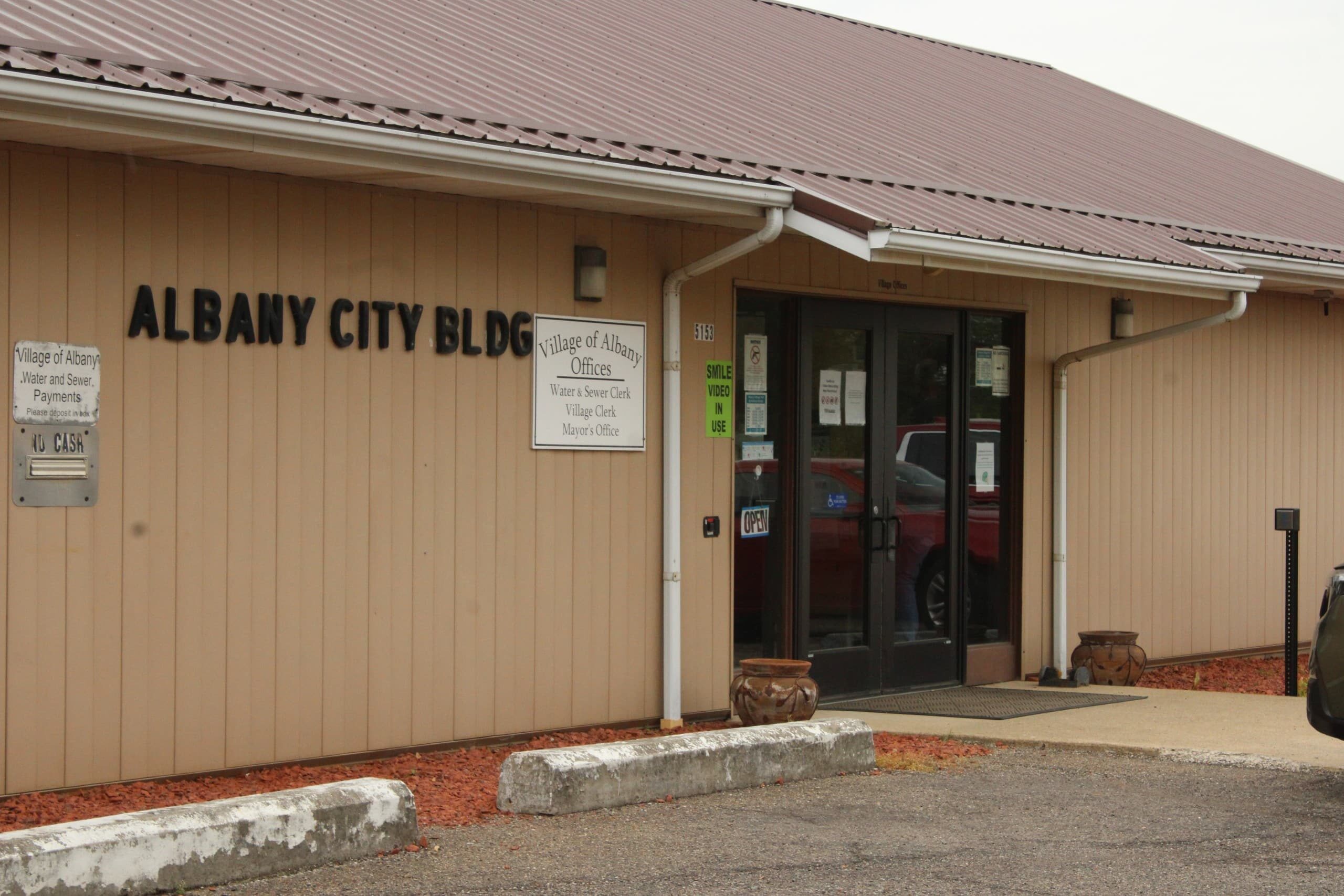
ALBANY, Ohio — Six part-time officers resigned from the Village of Albany Police Department July 1, citing what they described as a lack of “adequate support, administrative boundaries, and a baseline of professional trust.”
Sergeant Aaron Dillard and patrolmen Justice King, Taylor Cottrill, Aleena Doczi, George Williams, and Cody Weber submitted a joint resignation letter at the Albany Village Council July 1 meeting.
In their letter, the officers emphasized that Albany Police Marshall Darrell Keller “has done an exceptional job leading this department.” However, they criticized Albany Mayor Tim Kirkendall for “micromanagement” and “a toxic, dysfunctional working environment.”
In addition, they wrote, “a persistent lack of professional support from both the Mayor and some members of this Council has left our officers under-resourced and isolated while trying to fulfil our daily duties.”
The officers said they had tried to resolve the issues, but could not.
“We have repeatedly brought our concerns forward through the proper channels in hopes of finding collaborative, professional solutions, but those efforts have been made fruitless,” they wrote.
However, village council member Elliot John-Conry, who serves on the council’s Police and Safety Committee, said the officers did not bring their concerns to him. The resignations “came out of nowhere,” he said.
“If you haven’t voiced a concern to the council, the police committee, or the mayor, how is anybody supposed to know that there’s something that needs addressed?” he said.
In a July 31 response letter to the officers, Kirkendall said that any concerns should have been brought to Keller, then presented to the mayor, before the July 1 council meeting.
Kirkendall also noted that officers Williams and Weber were not employed by the village and had not completed any shifts. Williams, he wrote, did not complete the paperwork to become a part-time employee, and Weber had never worked a shift in Albany.
The officers’ resignation letter also accused Kirkendall of removing comments, posts, and officer access to the police department’s Facebook page.
In his response to the officers, Kirkendall said he has always been the administrator of the department’s Facebook account as part of the chain of command in a village.
“Unlike a Sheriff’s office or a City police department, the Mayor of a Village has a headship overseeing role directly over the Albany Police Department,” Kirkendall wrote. “I do not think that our recent slate of Albany Police officers understood that village organization, nor the Mayor’s statutory authority and responsibility to the public.”
Dillard did not respond to multiple requests for comment by email in July and August. Messages to village email addresses for Doczi and Weber were returned as undeliverable. A message to Cottrill’s village email address was not returned. King could not give comment in time for publication. Williams declined to comment and Kirkendall declined to be interviewed for this story.
Pushed by Meigs?
In his response letter, Kirkendall alluded to a different reason for the officers’ resignations.
Because Albany is a village, its police department relies on part-time officers for support. Those officers patrol parts of the village and can moonlight as security for private venues or events. They also can serve as police officers in other jurisdictions.
Dillard, King, Cottrill and Williams all work full-time as deputies of the Meigs County Sheriff’s Office.
According to Kirkendall, an officer at the July 1 meeting said that Meigs County Sheriff Scott Fitch told the six officers to “make a choice” between their part-time employment in Albany and their full-time jobs in Meigs.
Fitch could not be reached for comment by email on Aug. 6 or by phone on Aug. 10. He formerly was chief of police in Nelsonville.
Meanwhile, the village has six openings for part-time police officers. John-Conry said finding people has been a challenge. Usually, Albany’s part-time officers have family in the area or need to keep their police license active by completing hours, he said.
Note: This story was updated at 1:40 p.m. Aug. 17, 2026, to clarify how the Independent attempted to reach the officers for comment.
