ATHENS, Ohio — In two press conferences and a town hall sponsored by the League of Women Voters of Athens County held earlier this month, the public had opportunities to hear City of Athens officials explain why they want voters to increase the city income tax from 1.95% to 2.25%, beginning next year.
In December 2024, Athens City Council passed an ordinance to seek voter approval to raise the city income tax from The .3% represents a 15% increase overall.

Issue 3, the proposed increase in the municipal income tax, will appear on the May 6 primary ballot.
State law allows municipalities to levy up to 1% in income taxes without voter approval; increases that raise the tax above 1% must go before voters. Athens voters last raised the municipal income tax in 2016, when 67% of voters approved the tax. That set the rate at 1.85% from 2017 to 2022, increasing to 1.95% effective Jan. 1, 2023.
Nearly 60% of the revenue from the municipal income tax goes to the city’s general fund, with the rest going to funds for street maintenance and repair, recreation, capital improvements and debt service.

What city officials have said
The Independent reviewed some of the most frequent statements city officials made in city council meetings, at press conferences on April 7 and 14, and at the League of Women Voters’ town hall. We also made graphs of data presented at those events, as well as financial audits of city finances available from the Ohio Auditor of State..
Claim: Income tax revenue far exceeds city revenue from other taxes, including sales tax, liquor taxes and gasoline taxes.
True. In 2023, income tax receipts accounted for two-thirds of general fund revenue.

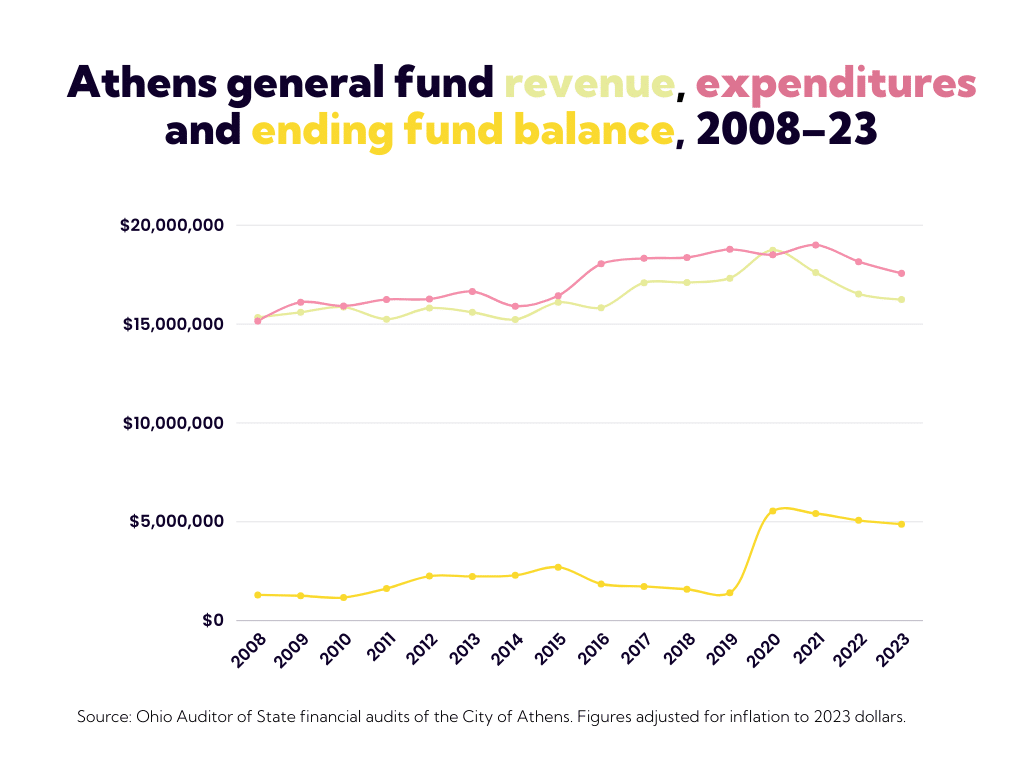
Claim: While the city’s revenues remain ahead of expenses, that trend will not continue.
Mixed. According to the state’s annual audits of the city’s finances, general fund expenditures have consistently outpaced revenue over the past 15 years. . The general fund end-of-year balance jumped significantly in 2020; the city ended 2023 with a $4.9 million general fund balance.
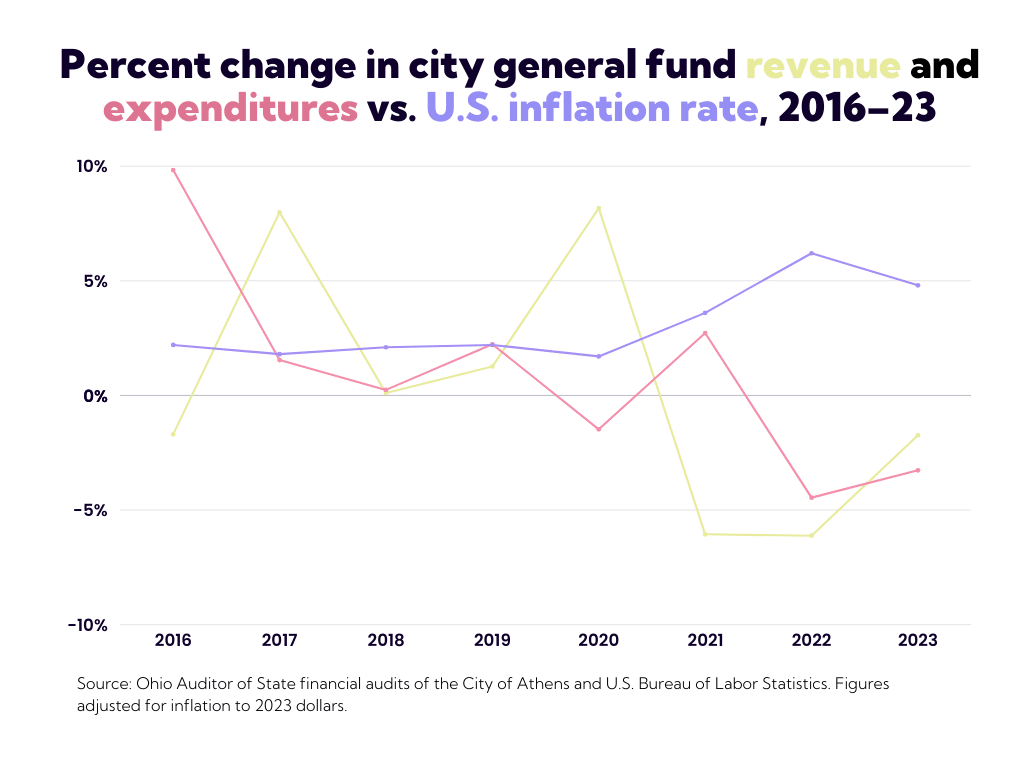
Claim: The $2.6 million generated by the increased income tax will cover increases in inflation since the last income tax increase in 2016.
Unclear. The cumulative U.S. inflation rate from 2016 to 2023 is 27%, with annual rates ranging from a low of 1.4% in 2020 to a high of 7% in 2021. The average inflation rate over that time is 3.34%.
In general, the city’s general fund expenditures have trended downward since 2016; the average year-over-year increase is below .25%, well below the rate of inflation. General fund revenues averaged a 0.92% increase since 2016.
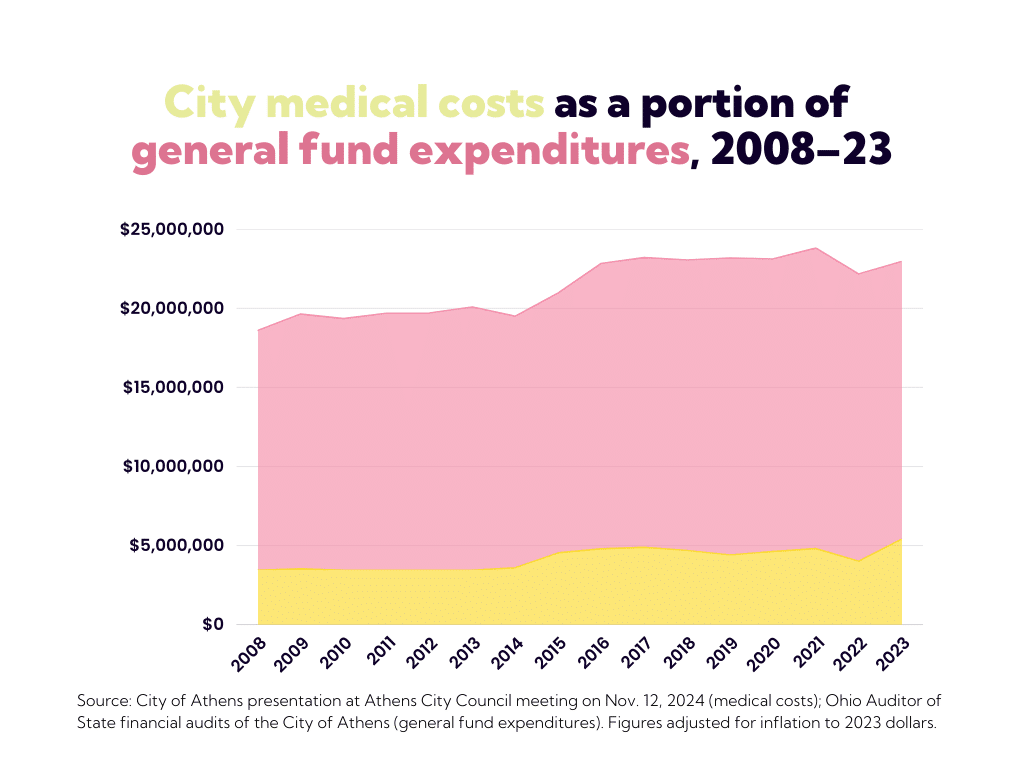
Claim: Over the past 15 years city healthcare costs have gone up by 58%.
True. And as the dollar amount has increased, medical costs have claimed an increasing share of total general fund expenditures and revenue alike.

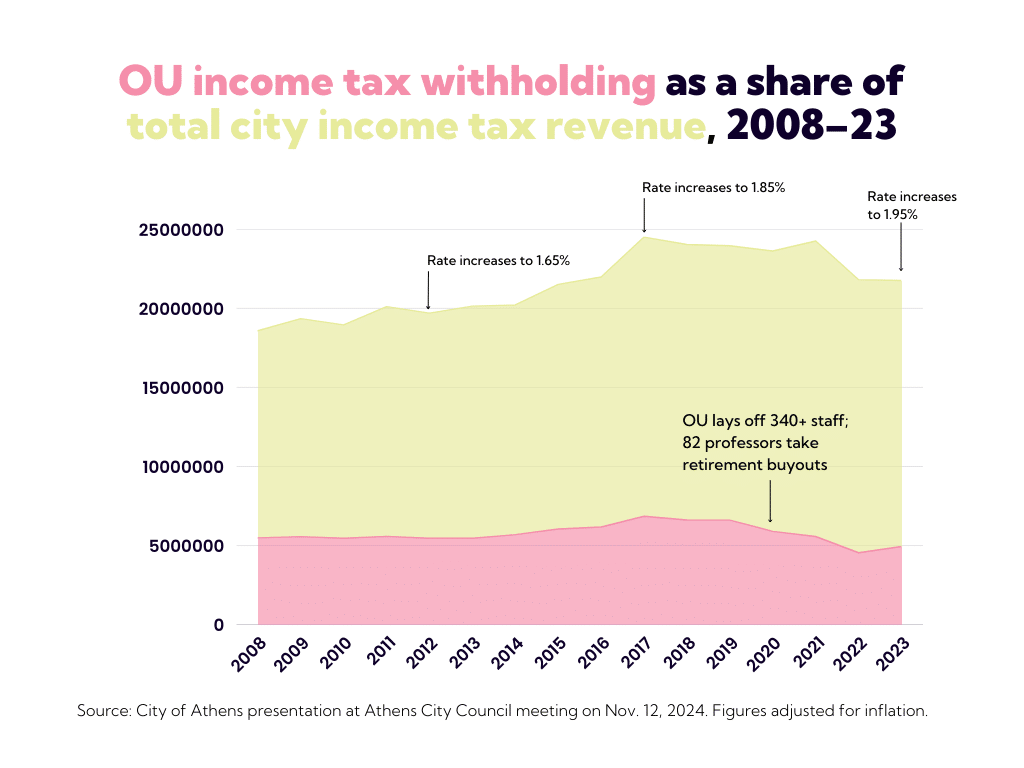
Claim: Income tax withholding from Ohio University employees has dropped from 42% of income tax revenue in 2008 to 29% of revenue.
Mixed. The percentage of income tax revenue that comes from Ohio University withholding dropped between 2008 and 2023. But the actual dollar amount of withholding is only about 10% less. The share of income tax revenue coming from OU is lower because the city’s overall income tax revenue grew by over 28% in that period.
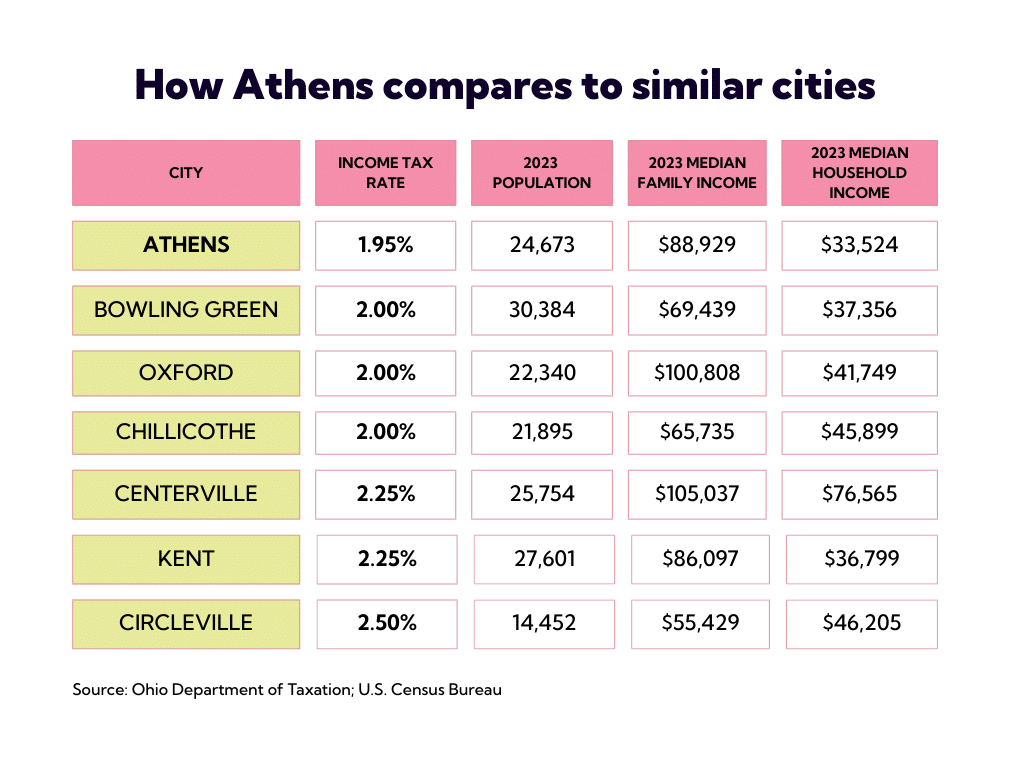
Looking at comparable municipalities across the state of Ohio, Athens’ city income tax rate is lower than those in comparable cities.
The Ohio Department of Taxation lists 663 municipalities with income taxes, with an average rate of 1.5%. However, the vast majority of those municipalities (467) have rates below 2%. Just 70 have rates of 2.25% or more.
In introducing the proposed income tax hike at Athens City Council’s Nov. 24, 2024, meeting, the city administration shared a list of “2023 Notable Cities’ Rates.” That list included cities that are significantly richer (Dublin) and larger (Cleveland, Columbus, Cincinnati, Akron, Toledo, and Dayton) than Athens.
Athens’ income tax rate is below those of other public university towns and regional cities with comparable populations. Athens’ median household income is the lowest of the seven, although its median family income is the third highest.
Keri Johnson contributed reporting for this story.