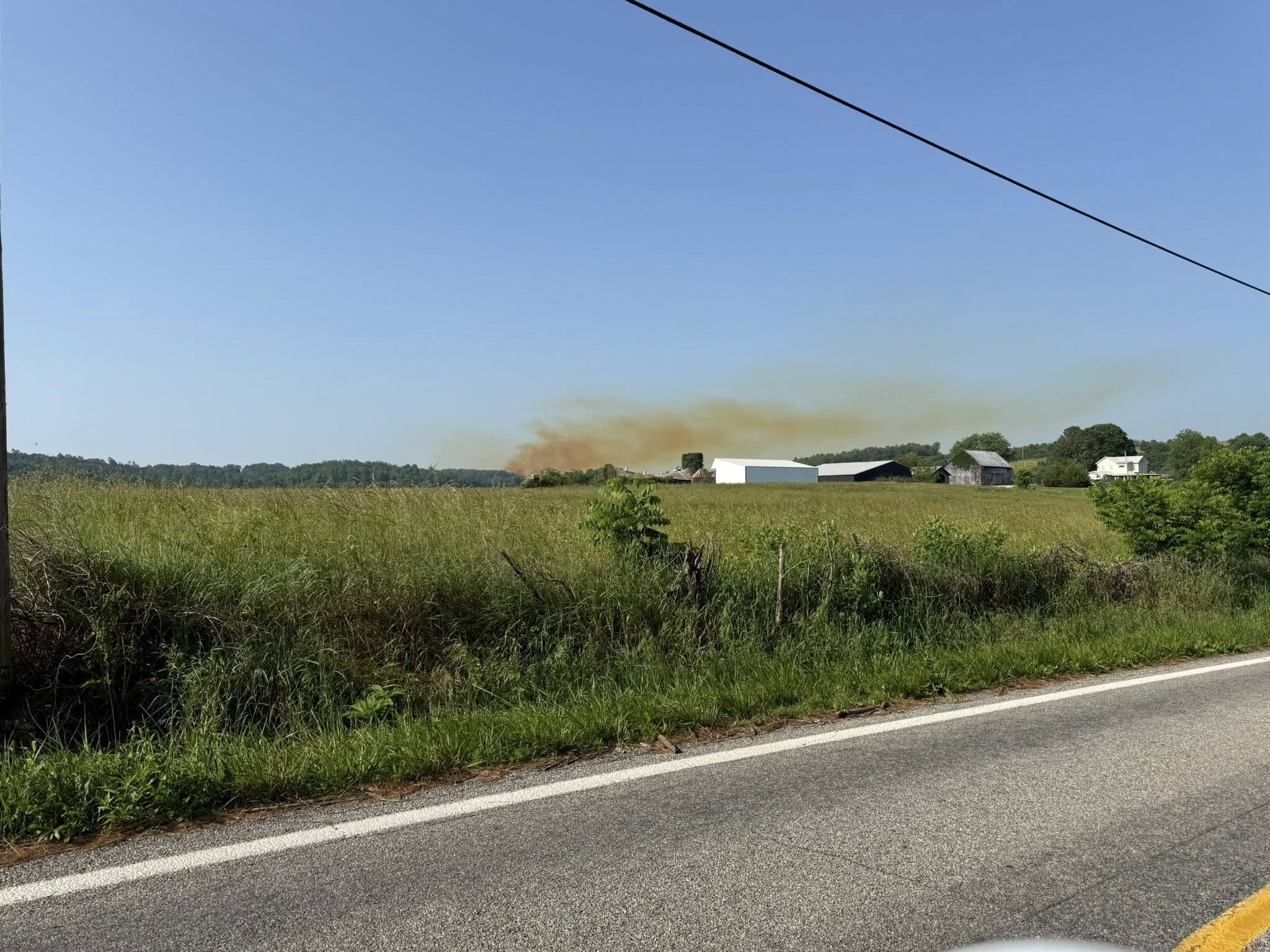
VINTON COUNTY, Ohio — A week after an industrial accident sent a chemical plume into the skies over Vinton County, officials have provided few answers regarding what exactly went wrong at the Austin Powder plant — which has a long history of violations.
Cleveland-based Austin Powder Company manufactures explosives for mining operations worldwide. The Red Diamond facility in Vinton County is the company’s primary site in North America, according to its website. The facility produces pentaerythritol tetranitrate, or PENT, a powerful explosive that is a primary component of the plastic explosive Semtex.
PETN is manufactured using concentrated nitric acid.
“Importantly, the nitric acid remained fully contained throughout the event—there were no leaks or spills,” Brad Kostka, a communications consultant for Austin Powder, said in a June 13 press release. “A modest amount of nitrogen oxide gas was safely vented through the plant’s built-in safety systems, which operated as they were designed to do in an event of this nature. This controlled release prevented more serious consequences and triggered the company’s emergency response protocols.”
When nitric acid decomposes, it forms nitrogen oxide. A June 11 statement about the accident from the Ohio Environmental Protection Agency says that exposure to nitrogen oxide can cause numerous health effects, including permanent lung damage.
Austin Powder representatives did not directly respond to a question about what exactly caused the elevated temperatures and if any temperature monitoring was in place.
“Austin Powder is conducting an investigation into the events of June 11,” a company representative said. “The storage tank and its safety systems retained their integrity and performed as designed.”
On Monday, Austin Powder announced that the Red Diamond facility had resumed operations.
“Employees have returned to the site, and a careful, phased restart of operations is now underway,” the release said.
In addition to an investigation into “the root cause of the temperature rise that led to the gas release,” Austin Powder said in its Friday press release that it will review “similar nitric acid storage systems across all company sites as a precautionary safety measure.”
The company also said it provided paid time off to employees during the plant closure, and that it plans to reimburse employees and community members for “qualified expenses related to the incident.”
Anthony Chenault, an Ohio EPA public information officer, said in a June 17 email that the agency does not yet know “what/if any consequences,” including possible fines or other legal consequences, Austin Powder could face as a result of the June 11 incident.
The Independent’s records requests for information from the Ohio EPA and correspondence between the agency and Austin Powder had not yet been fulfilled by press time.
This isn’t the first time the Austin Powder Company’s safety procedures have come under scrutiny.
Three employees were injured in a 2009 explosion at the factory; one suffered burns to 90% of their body and died of their injuries one month after the incident. The other two employees were treated for concussions, acute hearing loss, cuts and possible broken bones, according to a report from the Occupational Safety and Health Administration.
Multiple OSHA inspections of the plant have resulted in hundreds of thousands in fines for safety violations, including:
- Placing petroleum tanks where they could be struck by vehicle traffic with no additional protection (2013).
- Not providing an emergency eye wash station in a location with corrosive materials (2013).
- Not declaring previous incidents, including multiple explosions, in an analysis prepared for OSHA (2013).
- Not performing proper inspections on a number of machines (2013).
- Failing to comply with required guarding on machines to prevent employees from being harmed by rotating machinery, sparks and flying chips (2015).
A representative of the Vinton County Emergency Management Agency told the Independent that annual training with Austin Powder employees helped provide “a great advantage in the response to the June 11, 2025, incident.”
“Austin Powder annually completes training with local emergency service personnel to help prepare for these types of emergencies,” the representative said. “In recent years we have trained for the release of chemicals as a possible threat that emergency personnel could face at this facility. Austin Powder has been very open to training and allowing emergency crew leaders to enter their facility to complete training and plan for incidents.”
Residents, environment safe
Meanwhile, the Ohio EPA and local entities say the accident has had no adverse effects on local residents or to the environment.
Austin Powder released a statement on June 16 reporting that “days of air, water, and site safety testing confirmed there are no health hazards to the surrounding community.”
An Ohio EPA representative said tests were conducted by the Zaleski Fire Department and the Wellston Fire Department, and that the agency has “no concerns for wildlife based on our water sampling results and the results from the air screening tests conducted by Wellston Fire Department under the direction of Incident Command.”
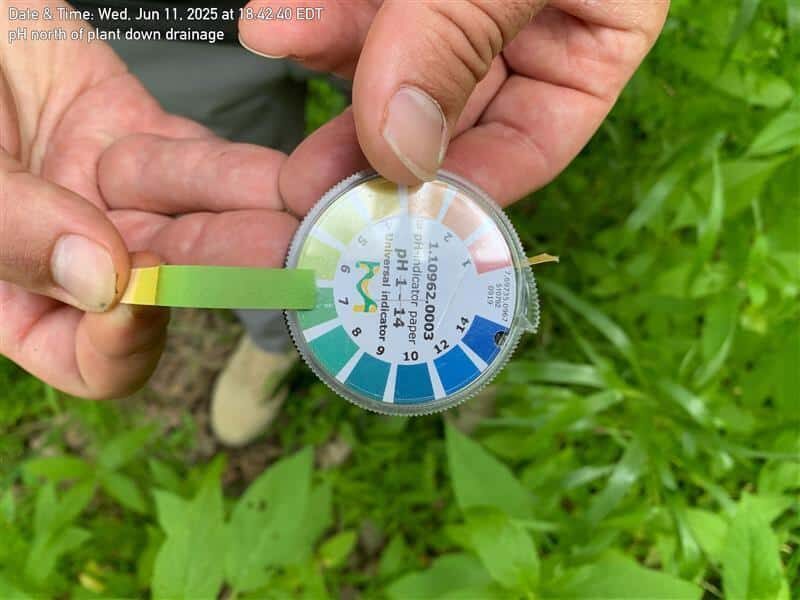
Water sampling apparently included a single pH test – measuring acidity – in nearby Raccoon Creek. That test came back within a normal range, according to the result provided by Chenault, the Ohio EPA public information officer.
The Ohio EPA and Austin Powder both told the Independent they’ve received no reports of harm to livestock or pets.
The Ohio EPA said questions about ongoing or future sampling should be directed to Austin Powder, which told the Independent only that “Austin Powder has retained third-party experts to monitor, test and assess any impacts.”
Corinne Colbert contributed reporting to this story.