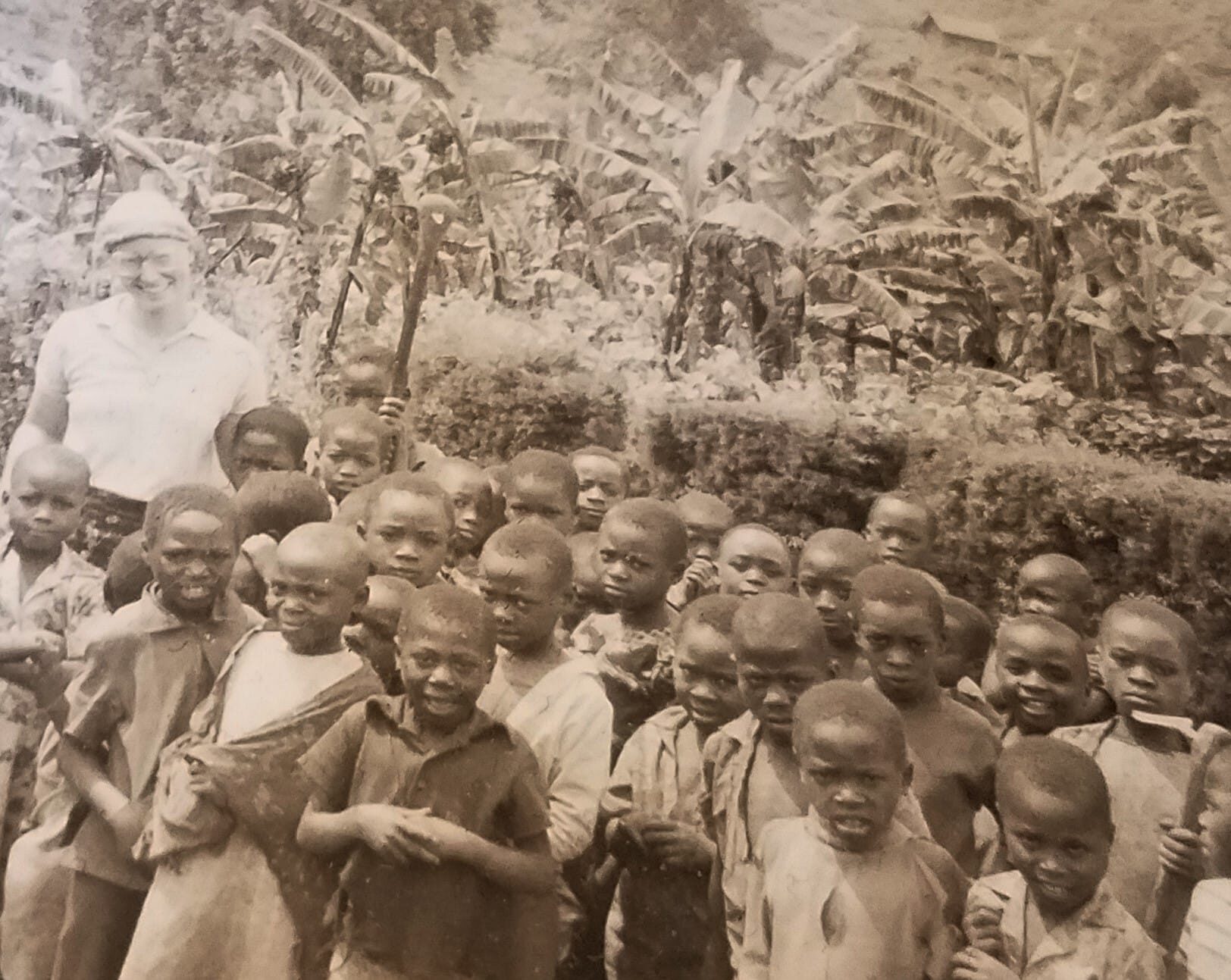
Into a wracked world of rapid culture change and seismic geopolitical shifts, 62 years ago a new young world leader sought positive countermoves to the global tumult and his nation’s own uneasy role in the melee. In response to Russian Yuri Gagarin’s inaugural space flight, JFK created NASA. And amidst the massive overthrow of former colonial powers and his own failures in the Bay of Pigs, he established the U.S. Peace Corps.
Today, returned Peace Corps Volunteers number almost 250,000 Americans, including 10% of the U.S. Foreign Service and hundreds of famous and of impactful unknowns in government, education, business, science, the arts. Any field, of course, benefits from the goals the Peace Corps teaches its international ambassadors: (1) to be present; (2) to represent; and (3) to bring it home.

For me, in 1985 when I first touched down in Zaire (now the Democratic Republic of the Congo), there weren’t many barriers to “being present.” Cell service was yet to arrive anywhere, electricity unavailable, letters three months in transit (if they turned up at all). Life lessons from my hosts were all around me. Women toiled through fields under a massive headload of farm implements and produce, baby on back, toddlers trotting beside. Preteens staggered home with bowls of water, climbing the massive hill from a sole local well. Men sweated for weeks around smoking mountains of curing bricks for more durable homes. Little, and large, lessons abounded: about the undying nature of the entrepreneurial spirit, unconscionable resilience, creative handmade solutions. And always, always, in the face of adversity, there was the importance of laughter. Laughter perennially underpinned the smoky hubbub and raucous negotiation at the weekly market, wafting between the waving thickets of sugarcane. And when chill rains and muddy paths and insurmountable health challenges presented themselves: “On va se debrouiller,” residents would say with a grin. “We’ll figure it out.”
My former host village has been, for years now, a nexus of conflict, stemming in part from its location at the confluence of three nations; in part from conflicts further south, where 75% of the world’s cobalt — essential to EV batteries and a myriad of other high-tech applications — is exploitatively mined. But even if I’ve never been back to that village, I’ve been fortunate, through federally sponsored training assignments to many African countries, to meet tens of today’s young Africa leaders. My social media is full of their successful responses to local challenges, often in ways that read directly on my own current day-to-day.

That wracked world of 62 years ago is still with us. We experience it now in a far more connected and cacophonous place, where both appalling global injustice — and incredible transnational joy — are at every fingertip. The Peace Corps opportunity is, today, multiplied in many ways that don’t require the kind of resources or cultural transposition of that still-impactful organization. Americorps/VISTA, mission trips, educational exchanges — all are vital ways to be present in new spaces, to engage, and to bring experience back to your home space.
If, on the face of it, a typical scene from a marche across the globe, a grocery here at home, and even the cramped quarters of the International Space Station are hard to fathom, the root causes of deeply entrenched socioeconomic and political hierarchies and powers are indistinguishable. But some key lessons remain the same. If we can be present, if we can engage, and if we can bring today’s lessons into our actions tomorrow — we all have the power to effect justice, however we may define it. And we can all find empathy with “the other.” Who — it turns out — are always just us … in different sort of spacesuit.