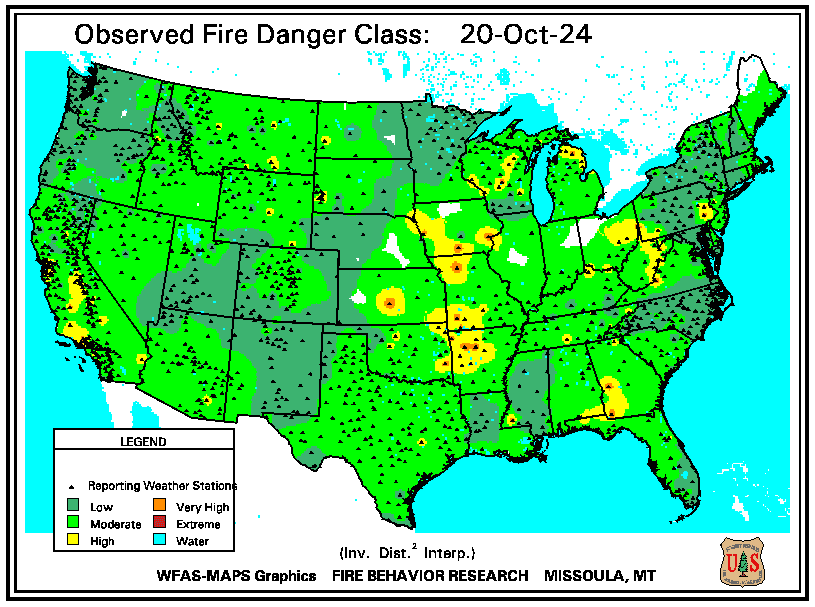
NELSONVILLE, Ohio — The onset of fall conditions and recent rainfall have caused the Ohio State Fire Marshal to lift the burn ban placed on several Ohio counties in September.
Kevin Reardon, the Ohio state fire marshal, said that shifting environmental conditions tracked by the Keetch Byram Drought Index motivated the lifting of the ban. This index specifically measures wildfire risk in relation to precipitation patterns and is a key resource for fire management officials.
“We had seen a change in the factors that influence the ignitability of fuels in the environment,” Reardon said. “In layman’s terms, we had rain, temperature and humidity changes.”
While the burn ban has been lifted, Ohio’s annual fall burn ban is still in effect. Andy Pascarella, the forest fire management officer for the Wayne National Forest, explained that Ohio’s dry falls are the primary cause for the annual ban.
“The cooler weather in the fall actually brings drier days with low humidity,” Pascarella wrote in an email.
Reardon explained that the seasonal burn ban functions similarly to the ban he just lifted.
“That 6 a.m. to 6 p.m. ban is aimed specifically at things that were covered by the prior burn ban,” Reardon said. “They don’t want you to burn your trash, they don’t want any open burnings, they don’t want anything that can get out of control easily and start a fire”
For Pascarella and the Wayne National Forest, this means a focus on educating the public via signage at campsites and trailheads. Specifically, Pascarella mentioned that campers need to be sure to put out their campfires before 6 a.m.
In addition to the annual ban, the Wayne National Forest has a number of fire prevention practices. However, prescribed burns have been halted due to the ongoing drought conditions.
“Fuel reduction projects on the Wayne usually consist of prescribed fire treatments on certain blocks of land implemented under the proper weather parameters by trained employees,” Pascarella wrote in an email. “And Timber Stand Improvement projects consisting of reducing understory plants and smaller competing trees.”
The press release announcing the lifting of the ban noted that the burn ban could return if conditions worsen. Reardon echoed this sentiment, noting that while wildfire conditions have improved, drought conditions have persisted.
“If I could predict the weather I’d be a billionaire,” Reardon said. “Those conditions which would cause us to go into another burn ban are entirely weather dependent.”