
The deadline to register to vote in the Nov. 3 general election is Oct. 5. Find more information via the Athens County Board of Elections.
OHIO HOUSE DISTRICT 95 — Paul Cameron, of St. Clairsville, is running to represent portions of Athens County in Ohio House District 95.
The district comprises the City of Athens; rural swaths of Athens, Belmont and Guernsey counties; and all of Harrison, Morgan and Noble counties.
Cameron beat James Joyce, of Athens, in the Democratic primary this past spring. Cameron is running against incumbent Rep. Ty Moore (R-Caldwell) in the general election.
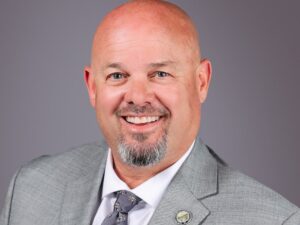
Cameron grew up in Weirton, West Virginia, the child of school teachers. After “a couple years of college,” Cameron spent time in active duty for the U.S. Army through 1999, where he worked in military intelligence as an Arabic-speaking interrogator. He was an anti-terrorism force protection officer for the U.S. Air Force from 2003 to 2004.
He finished school and moved back to the Ohio Valley in 2006. He later obtained an associate’s degree in civil engineering in 2012 and worked on various construction projects. He also worked as a surveyor for four years and in construction management for 10 years.
The Independent interviewed Cameron via phone Sept. 9 to talk about his campaign, his politics and what he hopes to achieve if elected. The interview has been edited for clarity and brevity.
What are your political beliefs or identities?
I was a big fan of Teddy Roosevelt when I was younger, so I very much appreciated his form of progressivism, the support of the labor movement. I appreciate Eisenhower’s steady-handed approach to governance.
I went through a period where I was with the Libertarian Party from ’97 to 2006. I came over to the Democrats in the 2008 election because I just saw things shifting away from where I was at. And Bernie Sanders — when I first found out about Bernie Sanders in 2014, I was very excited to finally see a national politician who actually was espousing most of the views that I had. I view myself as a progressive libertarian. That is the label I apply to myself and have used since 2012.
People ask me, ‘How do you square having Libertarian views with being a Democratic candidate?’ I believe that our tax dollars should support ‘we the people’ rather than large corporations, while Republican-leaning libertarians are all about deregulating corporations.
What are your top issues to address in office?
I’m centering my run for office on community revitalization, supporting local communities, and closing data centers.
If you’re familiar with what’s happening in Glouster, you have properties that have become blighted over the course of several decades and the land bank is taking control of these. The Glouster Revitalization Organization has then gotten a hold of those and is working on restoring those commercial buildings and putting in locally owned businesses.
RECIRC: Local organizations drive big changes in Glouster
You rebuild the core of villages that were abandoned by the industries that were there before, making those communities somewhere that manufacturing businesses want to be and then growing out from there. That would help build your tax base, build your employment base, and that would support funding your schools and your infrastructure projects as well.
We have a big problem throughout the district. When I visit councils and county commissioners that I go to visit, I hear over and over that they have problems funding their sewers, paving their roads, upgrading their water plants, and just keeping their sidewalks from being dangerous.
They have problems getting funding from Columbus. They have problems getting funding from organizations that provide grants because they’re just not competitive. You have a part-time village council in some small village of a couple hundred people, and they’re competing for these grants.
I would be looking to get onto the community revitalization committee, and I would be looking at what we needed to do in order to get funding into rural areas to encourage and develop local manufacturing and supporting local entrepreneurship.
There’s been a recent push in Ohio to abolish property taxes. What’s your take?
Banning property taxes is an absolutely horrible idea. So much of our county- and state-level funding comes from property taxes. That’s where a large portion of your school funding comes from. That’s your roads, your local health departments, your libraries — those are all coming out of those are all coming out of property taxes, which are collected at the county level.
We already see problems getting funding from the state general fund back into rural Appalachian communities. If you get rid of the property tax and then you raise that revenue through sales tax or income tax, those are collected at the state level. So now you’ve increased the fight to get any of that money back to Appalachian Ohio.
But at the same time, the way we’ve got things going with our property tax right now is broken. You’ve got some wild, crazy reassessments on what people’s property values are, and you have people who are finding over the course of just a couple years their property tax.
How do you feel about large-scale data centers?
What I’m largely seeing with data center [developers] is they look at Southeast Ohio as somewhere that is empty and backward, and they think that they can come here and get them built and get them running before anybody knows.
The public needs to actually be aware. They need to actually be able to make sure that these data centers are good neighbors.
Cameron said he supports House Bill 983, the Enact the Data Center Accountability and Citizen Protection Act. It was introduced in July.
Do you think our current district maps are fair?
First off, it is a hot mess. We definitely need to fix the gerrymandering problem. There needs to be a way that we can do this consistently and fairly. I feel that I’m uniquely suited to represent this district because I have literally worked in all six counties prior to running for office.
What are your thoughts on SNAP and Medicaid? Do you support work requirements?
I did not support cuts to SNAP and Medicaid, I did not support work requirements. You have some people who simply cannot work.
When you start having these work requirements, you’re having to miss work to go in to file your paperwork to verify that you’re working, and then you’re having to take time off. We’re also in a situation where they’re trying to push data centers and artificial intelligence. If artificial intelligence is taking the jobs, then where are you going to get the jobs in order to qualify for these benefits? It’s a big ugly cycle, a big ugly loop.
I do believe that we need to reform the welfare system — be it Medicaid, be it food stamps. We need to streamline them. I think we need to use something similar to the way the earned income credit works and the tax returns, where you have where you have a certain peak and as your income increases, it [assistance] tapers off. The way it’s structured right now, if you have a job and it’s a dead-end job, you are stuck. You’re encouraged to stay there.
It’s not a good way to be running society. You want people to want to be more productive. You have to provide them incentives to do so. There’s too much focus on punishment for not complying and not enough focus on incentives for fully participating.
What’s your position on regulating marijuana use?
You need to regulate it to the extent that you keep it safe. You definitely need to regulate that from a consumer safety standpoint.
I am absolutely against the efforts that are being taken by the current legislature in Ohio to overturn what was previously established on the ballot initiative. I very much believe that if you want to smoke or use marijuana in the privacy of your own home, you should absolutely be allowed to do so.
However, I do have some concerns. I’m sure you’ve experienced driving down the road and you pass a car and you get a good whiff. We need to do some updating of the laws for driving intoxicated, for marijuana.
How could constituents get in touch?
I would encourage all constituents to get active, get involved with their village councils, their township trustees, their county commissioners and to address things through those channels. I’ve told several village councils that the first thing I will do after being elected is, I will be making sure that all village councils and county commissioners have my direct contact information.
Cameron’s email address is cameronfor95@gmail.com. He said his campaign Facebook page is the easiest way to get in touch with him.
